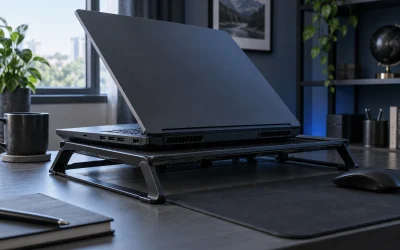
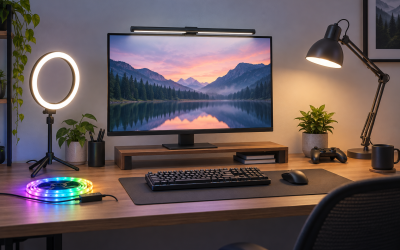
A USB-C dock can become warm during normal use, especially when it is charging a laptop, driving multiple displays, or supplying power to peripherals. It should not become painfully hot, smell like hot plastic, repeatedly disconnect devices, flicker displays, or shut down charging. Those symptoms point to excessive power draw, poor ventilation, a cable or charger mismatch, outdated firmware, or a failing internal component.
For PC gaming setups, docks are often asked to handle high-refresh monitors, external SSDs, Ethernet, controllers, webcams, and laptop charging at the same time. That workload can expose limits that are not obvious during basic office use. The goal is to identify whether the heat is normal operating warmth or a problem that requires reducing load, changing hardware, or replacing the dock.
Most Common Causes
| Cause | Symptom | Likelihood |
|---|---|---|
| High combined power load | Dock gets hottest while charging laptop and powering several USB devices | High |
| Insufficient or incompatible USB-C charger | Slow charging, charger cycling, USB disconnects, warm power brick or dock | High |
| Restricted airflow | Heat builds gradually; dock improves after being moved into open air | High |
| Display bandwidth or video-conversion load | Dock heats up during gaming, high refresh rate use, or dual-display operation | Medium |
| Damaged, low-rated, or overly long USB-C cable | Intermittent charging, connector heat, monitor dropouts, reconnect sounds | Medium |
| Outdated dock, USB4, Thunderbolt, graphics, or chipset firmware | Problems began after an operating system update or hardware change | Medium |
| Internal dock failure | Overheats while nearly idle, smells burnt, or fails with known-good equipment | Low, but serious |
Diagnose Step by Step
-
Check whether the temperature is actually unsafe
Disconnect the dock if its enclosure is too hot to touch for more than a few seconds, if you notice discoloration, melting, a burning odor, buzzing, or smoke. Do not continue testing a dock with those symptoms. If it is merely warm and all devices remain stable, proceed with the checks below.
-
Test the dock with the minimum possible load
Shut down the laptop, disconnect every device from the dock, then connect only the dock’s power adapter and one USB-C host cable to the laptop. Boot Windows and leave the system idle for 10 minutes. Then add one item at a time: monitor, Ethernet, keyboard and mouse, storage drive, audio interface, and charging devices. Note the point where heat or instability begins.
-
Verify charger wattage and USB-C Power Delivery status
Use the power adapter included with the dock whenever possible. If you substituted one, its USB-C Power Delivery rating must meet or exceed the dock manufacturer’s required input wattage. In Windows, open Settings > System > Power & battery and look for charging warnings. Also open Device Manager, expand System devices, and look for USB4, Thunderbolt, or USB Power Delivery entries showing warning icons.
-
Inspect cables and connectors
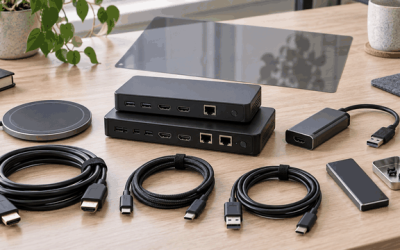
Check both ends of the host cable and charger cable for looseness, bent metal shells, exposed wire, darkened contacts, or a connector that becomes hotter than the dock body. Use a short, certified full-featured USB-C, USB4, or Thunderbolt cable appropriate for the dock. A charge-only USB-C cable may provide power but fail under display and data load.
-
Reduce display demand
Press Windows + I, go to System > Display > Advanced display, select the monitor connected through the dock, and temporarily lower Choose a refresh rate to 60 Hz. Disable HDR under System > Display > HDR. If heat and display dropouts stop, the dock may be operating near its video bandwidth or internal conversion limit.
-
Check Windows power behavior and event errors
Open Control Panel > Hardware and Sound > Power Options > Change plan settings > Change advanced power settings. Under USB settings > USB selective suspend setting, temporarily set the relevant power mode to Disabled for testing. Then open Event Viewer with Windows + X > Event Viewer and review Windows Logs > System for recurring USBHUB, USBXHCI, Thunderbolt, Kernel-PnP, or DisplayPort-related errors.
Fixes by Cause
High combined power load
What causes it: The dock’s internal power-delivery circuitry must distribute power between the laptop and connected devices. Bus-powered SSDs, RGB accessories, capture cards, webcams, and charging phones can push it beyond a comfortable thermal range.
How to check: Run the minimum-load test, then reconnect accessories individually. External drives, charging devices, and capture hardware are common triggers.
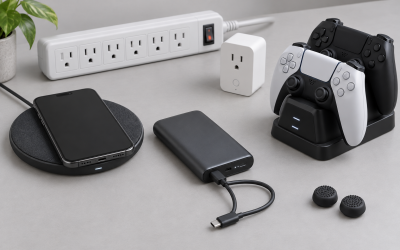
What to do: Move high-draw peripherals to separate laptop ports or use a powered USB hub with its own AC adapter. Charge phones and handhelds from a wall charger rather than the dock. Avoid connecting multiple bus-powered drives at once. For gaming, connect the primary monitor directly to the laptop’s HDMI, DisplayPort, USB-C, or mini DisplayPort output if available.
How to undo: Reconnect devices one at a time after the dock remains stable and only warm under its reduced load.
Insufficient or incompatible charger
What causes it: A lower-wattage adapter, non-PD charger, or third-party adapter with an unsupported voltage profile can make the dock work harder and repeatedly renegotiate power.
How to check: Read the dock’s input requirement on its label or documentation. Compare it with the charger output label, such as 20 V at 5 A for 100 W. The charger must support the needed Power Delivery profile, not merely advertise a large maximum wattage.
What to do: Use the original dock adapter or a reputable USB-C PD adapter that meets the required wattage and voltage profile. Connect it to the dock’s dedicated power-input port, not a data-only USB-C port. Plug the adapter directly into a wall outlet for testing rather than a crowded power strip.
How to undo: If the replacement charger does not improve charging stability or dock temperature, return to the original adapter and investigate cable, firmware, or hardware faults instead.
Restricted airflow
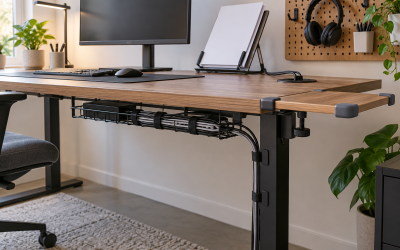
What causes it: Aluminum dock housings intentionally transfer internal heat outward. Placing one under a laptop, on carpet, against a console, or inside a cable-management compartment traps that heat.
How to check: Move the dock onto a hard, open desk surface and leave at least 2 inches of open space around its sides. Compare behavior after 20 to 30 minutes of the same workload.
What to do: Place the dock horizontally on a solid surface, keep its vents uncovered, and route cables so they do not bundle tightly around it. Keep it away from radiators, direct sunlight, and the exhaust path of a gaming laptop or desktop.
How to undo: No system setting is changed. You can return the desk layout once you confirm that airflow was not the cause, although open placement remains the safer arrangement.
Display bandwidth or video-conversion load
What causes it: A dock may internally convert DisplayPort, HDMI, USB-C DisplayPort Alt Mode, or DisplayLink signals. High resolution, HDR, multiple monitors, and high refresh rates increase processing and bandwidth demand.
How to check: In Settings > System > Display > Advanced display, lower the dock-connected monitor to 60 Hz. Test one monitor instead of two. Turn off HDR and temporarily set resolution to 1920 x 1080.
What to do: Use a direct display connection for the gaming monitor, especially for 120 Hz or higher. Reserve the dock for secondary displays and peripherals. Use the dock’s native DisplayPort output when possible instead of adding HDMI adapters or daisy-chained converters.
How to undo: Restore your preferred resolution, HDR setting, and refresh rate one setting at a time. Stop at the highest stable combination that does not cause excess heat or disconnects.
Cable, driver, or firmware problems
What causes it: A marginal cable can create repeated reconnects, while outdated firmware or drivers can mishandle power states and display negotiation.
How to check: Test with a known-good short cable. In Device Manager, expand Universal Serial Bus controllers, Display adapters, and System devices for warning symbols. Check Settings > Windows Update > Advanced options > Optional updates for relevant driver updates.
What to do: Update the laptop BIOS/UEFI, chipset driver, graphics driver, and dock firmware from the laptop and dock manufacturers. During dock firmware installation, connect AC power, disconnect nonessential peripherals, and do not unplug the dock until the updater confirms completion. In 2026, USB4 and Thunderbolt firmware compatibility remains especially important on newer laptops.
How to undo: If a driver update causes new faults, open Device Manager, right-click the affected device, choose Properties > Driver > Roll Back Driver when available. For BIOS or dock firmware, do not downgrade unless the manufacturer explicitly provides a supported recovery method.
When to Replace or Reinstall
Replace the dock immediately if it emits smoke, sparks, a burning smell, or shows melted plastic, bulging, scorched ports, or persistent electrical buzzing. Also replace it if it overheats with only the laptop connected and after testing a known-good charger and host cable. Do not open the enclosure; most docks have no user-serviceable thermal parts, and opening one can create shock and warranty risks.
Reinstall software components before replacing otherwise healthy hardware. In Device Manager, right-click the affected USB hub, Thunderbolt controller, DisplayLink device, or dock-related display adapter and select Uninstall device. Restart Windows, reconnect the dock, and allow Windows to reinstall the device. If a dock uses DisplayLink, uninstall its software from Settings > Apps > Installed apps, restart, then install the current package supplied for that dock.
FAQ
Is it normal for a USB-C dock to get hot?
Moderate warmth is normal when a dock is charging a laptop or handling displays and peripherals. Painful surface heat, burnt smells, repeated disconnects, or shutdowns are not normal and should be treated as a fault or overload condition.
Can a hot dock damage my laptop?
A compliant dock should negotiate power safely, but a defective dock, cable, or charger can cause unstable charging and port stress. Disconnect it if the USB-C connector itself becomes very hot, charging repeatedly starts and stops, or the laptop reports an unsupported charger.
Why does my dock overheat only while gaming?
Gaming commonly raises monitor refresh rate, activates HDR, increases Ethernet traffic, and powers more accessories. If the laptop is also charging through the dock, the combined display, data, and power load can be much higher than during desktop use.
Will a cooling fan solve the problem?
A small desk fan can help confirm an airflow issue, but it does not fix inadequate power delivery, cable faults, or failing internal circuitry. Use it only as a diagnostic aid; reduce load or replace the dock if overheating persists.