A laptop stand that wobbles while typing is more than an annoyance: it can make the keyboard feel imprecise, strain your wrists, loosen ports over time, and create distracting screen movement during games or work. The cause is usually mechanical rather than a laptop software problem. A flexible stand, uneven desk, loose hinge, poorly distributed laptop weight, or typing force can all turn small movement into noticeable rocking.
Start by isolating whether the movement comes from the desk, the stand, or the laptop itself. Do not immediately tighten every visible screw or add adhesive pads; those actions can hide the real issue or make a folding stand harder to adjust later. The checks below work for fixed risers, folding aluminum stands, cooling stands, monitor-arm laptop trays, and desk-mounted platforms.
Most Common Causes
| Cause | Symptom | Likelihood |
|---|---|---|
| Uneven desk surface or unstable desk | The entire stand rocks when pressed at opposite corners. | Very high |
| Uneven, worn, or missing rubber feet | Stand shifts, clicks, or rocks only on one diagonal. | Very high |
| Loose folding hinges or adjustment joints | Movement increases at taller angles or when typing near the top keyboard row. | High |
| Stand is too light, narrow, or flexible for the laptop | Visible bouncing or twisting even though the feet stay planted. | High |
| Laptop is positioned too far forward or off-center | Front edge dips, rear support lifts, or one side flexes more. | High |
| Keyboard typing force or desk vibration | Wobble appears mainly during rapid typing, gaming, or forceful key presses. | Medium |
| Damaged laptop chassis, swollen battery, or bent stand frame | Laptop itself does not sit flat, or wobble remains on multiple surfaces. | Low but important |
Diagnose Step by Step
1. Test the desk before testing the stand
Remove the laptop and stand. Place both palms on the desk where the stand normally sits, then press down at the front-left, front-right, rear-left, and rear-right positions. Watch the desk edge and listen for clicking. If the desk moves, test a different area, preferably above a leg, frame rail, or solid pedestal. A thin tabletop can flex enough to feel like a stand problem, especially when the stand is placed near the front edge.
2. Check whether the empty stand has a four-point wobble
Place the empty stand on a hard, clean surface. Press gently on each top corner in sequence. A stable stand should not alternate between corners. If it rocks diagonally, mark the corner that lifts using a small piece of painter’s tape. Inspect the corresponding foot for dirt, compression, peeling adhesive, or a missing pad.
3. Test the laptop on the desk without the stand
Set the laptop directly on the desk with the lid open. Press lightly near the left and right palm rests. If the chassis rocks, inspect the bottom panel and battery area. Also check that no rear rubber strip, foot, screw cover, or vent piece is partly detached. Stop using the laptop on a stand if the bottom cover bulges or the trackpad has become difficult to click; those can be warning signs of battery swelling.
4. Recreate the wobble with the laptop centered
Put the laptop back on the stand, centered left to right. The rear support should contact a strong, flat portion of the laptop underside, not just a vent grille or a curved edge. Keep the front retaining lip below the chassis, not pressing into a port, speaker opening, or bottom-panel seam. Type a short paragraph normally, then press near the upper-left and upper-right keyboard corners to identify whether the movement is front-to-back, side-to-side, or torsional twisting.
5. Inspect hinges, screws, and locking tabs
For folding stands, lower the platform and move each hinge through its full range. Look for uneven resistance, clicking, visible gaps, cracked plastic, or a joint that drifts under the laptop’s weight. If the stand has a tension screw, use the correct driver size; a loose Phillips screw often requires a PH0 or PH1 bit, while small hex fasteners may require a 2 mm or 2.5 mm hex key. Do not force a screw that appears stripped.
6. Rule out input-related vibration
If the stand is stable when you press on it but shakes only while typing, compare the built-in keyboard with an external keyboard. In Windows, open Settings > Accessibility > Keyboard and make sure Filter Keys is not creating an unusual typing rhythm, although this setting will not physically cause wobble. On macOS, open Apple menu > System Settings > Accessibility > Keyboard and check Slow Keys for the same reason. These settings affect input feel, not stand stability; the comparison simply helps determine whether your typing force is triggering the movement.
Fixes by Cause
Uneven desk surface or desk flex
What causes it: A desk can be slightly warped, have a seam under the stand, or flex when your forearms rest on it. Lightweight gaming desks and thin particleboard tops are especially prone to movement near the front edge.
How to check: Test the empty stand in three locations: the usual position, near a desk leg or support, and on another hard table. If the wobble changes by location, the desk surface is the cause.
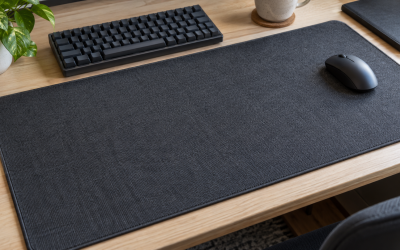
What to do: Move the stand 2 to 6 inches closer to a desk support or farther back from the front edge. Clear crumbs and cable loops from under the feet. For a minor surface irregularity, place a thin, firm desk mat or a single non-slip furniture pad under the low corner. Use a pad no thicker than necessary; thick foam can add bounce.
How to undo: Remove the pad or return the stand to its original location. No permanent modification is required.
Uneven or worn stand feet
What causes it: Rubber feet compress at different rates, collect debris, or detach after repeated repositioning. A missing 1 mm foot can create a surprisingly obvious diagonal rock.
How to check: Turn the stand upside down and compare all feet under bright light. Measure their apparent height with a ruler if needed. Wipe each foot and the desk with a dry microfiber cloth, then repeat the corner-press test.
What to do: Reattach a loose factory foot using its original adhesive if it still bonds cleanly. If replacement is needed, use matching low-profile silicone or rubber pads, usually 1 to 2 mm thick. Replace all feet as a set when possible so the stand remains level. Avoid soft gel pads that compress dramatically under load.
How to undo: Peel off aftermarket pads slowly. Any adhesive residue can usually be removed from metal with a small amount of isopropyl alcohol on a cloth, away from plastic labels and painted markings.
Loose hinges, joints, or adjustment hardware
What causes it: Folding stands rely on hinge friction or locking teeth. Repeated angle changes can loosen hardware, and a tall setup creates more leverage from each keystroke.
How to check: With the laptop removed, set the stand to its normal angle and press down on the platform. If the angle changes, a joint is slipping. Look for a user-accessible tension screw near the hinge, but do not disassemble riveted joints.
What to do: Tighten accessible fasteners in small increments: about one-eighth turn at a time, alternating left and right sides. Test after each adjustment. If the stand has several height slots, use a lower slot or a wider leg position. Ensure both sides are set to the same notch.
How to undo: Note the original screw position or take a photo before adjustment. Back the screw off in one-eighth-turn increments if the hinge becomes too stiff.
Stand is undersized, too flexible, or poorly loaded
What causes it: A wide or heavy laptop can exceed a stand’s practical stability even if it is below the listed weight limit. The issue is often torsional flex: one side of the platform twists while the other remains planted.
How to check: Center the laptop, then move it backward 0.5 to 1 inch while keeping the rear edge supported. If wobble improves, the center of mass was too far forward. Also compare typing with the stand at its lowest and highest settings.
What to do: Lower the stand angle, use the widest available base setting, and position the laptop so its weight sits over the stand’s main supports. If you use a 16-inch or larger laptop, choose a stand with a broad base, two rigid support rails, and a platform wide enough to support both sides evenly. For desk gaming, an external keyboard lets the laptop remain stationary on the stand.
How to undo: Return the stand to its previous height or remove the external keyboard. These changes do not alter the laptop.
Typing force and desk-borne vibration
What causes it: Rapid key presses transfer force through the laptop chassis into the stand. Mechanical keyboard-like laptop switches, energetic gaming inputs, and a desk that shakes when you rest your arms on it can amplify the effect.
How to check: Rest your hands lightly and tap a single key repeatedly. Then type normally. If only forceful typing causes movement while the stand remains level under hand pressure, vibration is the main contributor.
What to do: Use an external keyboard placed directly on the desk, leaving the laptop as a display. Add a thin dense rubber mat beneath the stand only if the stand itself is otherwise level. Keep charging and display cables slack enough that they do not tug the stand when your hands move.
How to undo: Disconnect the external keyboard or remove the mat. Re-route cables to their original positions if desired.
Bent frame, damaged chassis, or battery swelling
What causes it: A drop, overtightened hinge, warped aluminum frame, or expanding battery can prevent flat contact. This is not a problem to solve with shims alone.
How to check: Inspect the stand on a known-flat surface and inspect the laptop bottom with the stand removed. Look for a bowed bottom panel, separated seams, lifted trackpad, or a stand arm that is visibly out of alignment.
What to do: Stop using a visibly bent or cracked stand and replace it. If the laptop appears swollen or deformed, shut it down, unplug it, avoid pressing on the chassis, and arrange professional battery service.
How to undo: There is no safe home reversal for a swollen battery or structurally bent stand. Reinstall only verified replacement parts through the manufacturer or a qualified repair shop.
When to Replace or Reinstall
Replace the stand when a hinge slips after careful adjustment, a locking notch is rounded off, a welded joint is cracked, the platform remains twisted on a flat surface, or replacement feet cannot level it without excessive shimming. Reinstall the stand’s removable parts only if the manufacturer designed them for user installation: remove the laptop first, follow the original assembly order, and tighten paired screws evenly rather than fully tightening one side first.
Replace the laptop stand with a larger, more rigid model if it wobbles only under your laptop but is stable with a smaller device. If wobble began after a laptop battery replacement or bottom-cover repair, remove the stand from the equation and verify that the laptop itself sits flat. A laptop that rocks on every surface needs chassis or battery inspection before it goes back on any elevated stand.
FAQ
Is a little laptop stand wobble normal?
A tiny amount of flex can be normal on tall folding stands, but diagonal rocking, clicking, sliding, or visible screen shake during ordinary typing is not. A stable stand should keep all feet planted and hold its selected angle.
Can I use cardboard or paper to stop the wobble?
You can use a small folded paper shim briefly to confirm which corner is low. Do not treat it as a long-term fix: paper absorbs moisture, compresses, and can slide. Replace or level the foot with a proper low-profile rubber pad instead.
Why does the wobble get worse when the laptop lid is open?
An open lid shifts weight upward and slightly backward, increasing leverage on a flexible platform or loose hinge. Higher stand angles magnify this effect. Lowering the stand and tightening accessible joints usually reduces it.
Should I type directly on a raised laptop stand?
You can if the stand is rigid, wide, and stable, but an external keyboard is usually more comfortable for extended sessions. It also eliminates most typing-induced stand vibration and lets you position the laptop screen at a better viewing height.