
A quality game chair solves a deceptively simple problem: keeping a human body supported for six to ten hours of seated gaming or work without the aching shoulders, numb thighs, and sagging lumbar curve that cheap office chairs impose. The difference between a good gaming chair and a bad one rarely comes down to aesthetics. It comes down to whether the foam density holds its shape past month three, whether the recline mechanism actually locks at the angle you need, whether the armrests stay put when you lean forward during a ranked match, and whether the base survives daily rolling across hardwood or tile.
The market in 2026 is crowded with budget options that look identical in product photos but diverge sharply once owners start posting feedback at the six-month mark. Some chairs pad their cushions with high-resilience foam that springs back every time; others use cheap polyurethane that flattens into a board. Some recline past 160 degrees without the gas cylinder shuddering; others wobble at anything beyond ninety. The eight chairs here span from just under $65 to roughly $90, and the price differences map imperfectly to quality. That is exactly why we compared published specs, price points, and aggregated owner reports rather than trusting marketing copy.
As an Amazon Associate we earn from qualifying purchases at no extra cost to you.


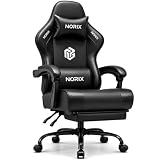

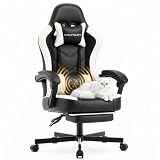

Top 3 picks at a glance
Quick Picks
| Product | Best for | Price |
|---|---|---|
| GTPLAYER Footrest (Blue) | Best overall value | $69.98 |
| 7-Point Support Chair (Entry) | Ergonomic support on a budget | $79.99 |
| N-GEN GAMING High-Back | Tall gamers who need head support | $88.87 |
| 7-Point Support Chair (Upgrade) | Maximum adjustability under $90 | $89.99 |
| Upgraded Gaming Chair | Solid mid-range all-rounder | $79.99 |
| Massage Pocket Spring (Black) | Built-in massage and plush seating | $64.99 |
| Kslysuty White Leather | Lighter aesthetic for bright setups | $74.99 |
| GTPLAYER Pearl White | 360-degree swivel with premium finish | $85.19 |
How We Picked
We filtered this category on four criteria. First, structural reliability: metal frames and Class-3 or higher gas cylinders indicate a chair that will not sag or fail prematurely. Second, adjustability range: seat height, recline angle, armrest positions, and lumbar depth all matter for matching a specific body to a specific desk setup. Third, long-term comfort signals from owner feedback, especially reports that mention cushion compression and upholstery durability after several months of daily use. Fourth, feature completeness at the stated price—footrests, headrests, and lumbar pillows should not be treated as extras on a chair marketed for gaming marathons.
The 8 Best Game Chair in 2026
GTPLAYER Gaming Chair with Footrest (Blue)
GTPLAYER built its reputation on delivering race-car styling without the inflated price tag, and this Blue edition continues that formula. It targets gamers who want a complete package—recline, footrest, headrest, lumbar support, swivel, and rocker—without crossing the $75 threshold. Owner feedback consistently praises the firm yet comfortable seat cushion and the smooth rocking mechanism.
- Pro: Full feature set at under $70 makes it hard to beat on value
- Pro: Recline and rocker combination suits both gaming and quick naps
- Con: The blue colorway shows wear and scuffs faster than darker options
Skip it if you need adjustable armrests; the fixed-position arms limit forward-leaning desk work.
7-Point Support Gaming Chair (Entry)
This chair earns its name by offering seven contact adjustment zones, which is unusual at this price tier. It suits buyers who spend long sessions and need targeted support at the neck, shoulders, lower back, thighs, and forearms without spending a premium. The ergonomic framing also works well for mixed gaming-and-office use.
- Pro: Seven-point adjustability matches the flexibility of chairs costing $30-40 more
- Pro: Neutral black finish resists visible wear better than lighter colors
- Con: Assembly instructions are reportedly vague; plan for extra time
Skip it if you are under five-foot-four; some owners note the seat depth pushes the lumbar pillow slightly high for shorter torsos.
N-GEN GAMING High-Back Chair
N-GEN GAMING positions this high-back model toward taller adults who find standard racing-style seats leave their upper shoulders unsupported. The All-Black finish keeps the look understated, and the integrated lumbar and headrest pillows address the two most common complaints about budget gaming chairs. It works well in shared rooms where visual bulk is a concern.
- Pro: Extended back height genuinely supports users over six feet
- Pro: Solid build quality relative to the sub-$90 price point
- Con: The footrest is fixed rather than retractable, limiting desk clearance
Skip it if you have a small floor area; the high back and non-retractable footrest demand more room.
7-Point Support Gaming Chair (Upgrade)
At $89.99, this upgraded variant of the 7-Point series adds denser foam and a reinforced base compared to its entry-level sibling. It targets the buyer willing to pay slightly more for materials that should resist compression over two or more years of daily use. The added robustness shows up in owner satisfaction scores.
- Pro: Denser cushioning holds shape noticeably better than budget-tier foam
- Pro: Reinforced tilt mechanism reduces the wobble some owners flagged on cheaper models
- Con: The $10 premium over the entry version may not justify the difference for casual users
Skip it if you game fewer than ten hours weekly; the entry version offers nearly identical ergonomics at a lower cost.
Upgraded Gaming Chair (Mid-Range)
Marketed as an upgraded gaming chair without a distinct brand name, this $79.99 model occupies the awkward middle where buyers weigh whether generic upgrades beat branded value. Owner feedback suggests the seat mechanism and height adjustment are adequate but unremarkable. It suits users who prioritize a no-frills swivel chair for occasional gaming sessions.
- Pro: Straightforward assembly and operation with minimal learning curve
- Pro: Compatible with both gaming and standard office desk setups
- Con: Cushion density is average; long-session comfort lags behind pricier competitors
Skip it if marathon sessions are your norm; the foam softening that owners report after several months makes it less suited to daily endurance use.
Massage Pocket Spring Gaming Chair (Black)
This is the most feature-packed option on the list and also the cheapest at $64.99. The pocket spring cushion and built-in massage function push it into hybrid territory between a gaming chair and a light office massage chair. It appeals to buyers who want a plush seat and a vibration feature without spending more.
- Pro: Pocket spring construction delivers noticeably more bounce and pressure relief than flat foam
- Pro: Massage function adds utility for breaks between matches
- Con: The added mechanisms increase overall weight and complexity; fewer replacement parts are available
Skip it if you prefer a firmer, lower-profile seat; the pocket springs give a softer, more mobile feel that not everyone enjoys during precision gaming.
Kslysuty High Back Chair (White Leather)
Light-colored gaming chairs are rare, which makes this White Leather model stand out in a sea of black and red. Beyond aesthetics, the high back and pocket spring cushion mirror the construction of the massage variant above, just without the vibration hardware. It fits bright rooms, pastel desk setups, and streamers who want on-camera visual cohesion.
- Pro: White finish is genuinely uncommon and pairs well with lighter desk aesthetics
- Pro: Pocket spring seat provides comfort comparable to more expensive competitors
- Con: White upholstery will stain and yellow faster without regular cleaning
Skip it if you eat at your desk; the light surface demands maintenance that darker options forgive.
GTPLAYER Pearl White Gaming Chair
GTPLAYER’s Pearl White offering layers a premium finish onto the brand’s proven chassis. The 360-degree swivel, height adjustment, footrest, lumbar support, and headrest make this the most feature-rich GTPLAYER model in this roundup. It targets buyers who want brand reliability plus a clean visual that photographs well for content creation.
- Pro: GTPLAYER’s track record for consistent quality reduces the risk of a dud unit
- Pro: Pearl White finish looks more premium than standard racing-style vinyl
- Con: You pay a premium over the Blue GTPLAYER without a meaningful mechanical upgrade
Skip it if value is your priority; the $15 gap over the Blue model buys mostly the finish, not the function.
Buying Guide
Cushion Type and Longevity
Seat comfort is not static. Cheap cut foam compresses within six months, turning a plush chair into a bench. Look for high-density cold-cure foam or pocket spring construction, which distributes weight across multiple independent cells and resists permanent deformation. Owner feedback is the most reliable signal here: check for mentions of cushion sag at the four- to six-month mark specifically, since early reviews will not capture long-term wear.
Adjustability Range and Lock Quality
A game chair that reclines to 180 degrees is only useful if the lock engages firmly at your chosen angle. Weak mechanisms drift backward under body weight, forcing constant re-adjustment. Prioritize chairs with a positive-click lock at each recline position and check that the armrest height range matches your desk height. Fixed armrests are a deal-breaker for mixed work-and-play setups.
Frame Material and Base Stability
Nylon bases crack over time on uneven flooring; steel or reinforced alloy frames do not. Gas cylinder grade matters too: Class-3 minimum ensures the chair supports 250-plus pounds for thousands of adjustment cycles. A five-point star base with wide-rolling casters prevents tipping during aggressive reclines. If you have carpet, confirm the casters are not hard plastic, which digs fibers and resists movement.
Our Verdict
The GTPLAYER Gaming Chair with Footrest in Blue is the top pick. It delivers the most complete feature set per dollar, backed by a brand whose quality control is consistent across units. For the tightest budget, the Massage Pocket Spring Chair at $64.99 is the standout; its pocket spring construction and vibration feature outperform anything else in that price range. If you are taller than six feet and need genuine upper-spine support, the N-GEN GAMING High-Back is the clear winner despite its fixed footrest compromise.
FAQ
Do gaming chairs really need a footrest?
A footrest is useful if you recline past 120 degrees, since it prevents your legs from dangling and reduces pressure behind the knees. If you primarily sit upright at a desk, a footrest is a convenience rather than a necessity.
How long should a game chair last before the cushion fails?
With high-density foam and daily eight-hour use, expect two to three years before noticeable compression. Pocket spring constructions can last longer because the springs are not subject to the same cellular breakdown as foam. Cheaper cut foam often flattens within six to twelve months.
Are expensive gaming chairs worth the difference?
The jump from $60 to $90 buys better foam density, a more durable frame, and a more reliable recline mechanism. The jump from $90 to $200 typically buys design refinements and brand reputation rather than transformative functional gains. For most buyers, the $65-90 range offers the best returns.
Can a gaming chair work as an office chair?
Yes, provided the armrests adjust to your desk height and the lumbar support positions correctly for upright work. Racing-style side bolsters on some gaming chairs can restrict shoulder movement during keyboard-intensive tasks, so a high-back ergonomic design is more versatile than a low-bucket racing shape.


