Shopping for a Nikon DX lens starts with a question that trips up plenty of buyers: is your camera a DSLR with an F mount, or a Z-series mirrorless body with an APS-C sensor? The word DX appears on both generations of glass, yet the lenses are built for different mounts, and the list below deliberately mixes them so you can see the trade-offs side by side. Pick the wrong mount and you are shopping for an adapter instead of enjoying the lens.
This guide is for owners of a crop-sensor Nikon who want a sensible next lens, whether that is a single walkaround zoom, a telephoto for sports and wildlife, or a fast prime for low light. As of 2026, plenty of photographers still shoot DX DSLRs, while others have moved to Z bodies, so both camps are covered based on the listed specs.
A practical way to use the list: decide the mount, decide whether you want range or brightness, and only then compare individual models. Range-first buyers lean toward the superzooms and telephotos, while brightness-first buyers gravitate to the f/2.8 zoom and the fast primes. Few lenses deliver both, which is why many Nikon DX shooters end up with a small two-lens kit instead of a single do-everything option.
Our Top Picks
Top 3 picks at a glance
Quick Picks
As an Amazon Associate we earn from qualifying purchases at no extra cost to you.





| Product | Best for | Key spec from the title |
|---|---|---|
| Nikon AF-S DX 18-300mm | One-lens travel on a DSLR | 18-300mm f/3.5-6.3G ED VR |
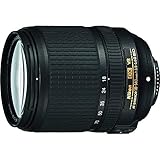
| Nikon AF-S DX 18-140mm (2213) | Everyday walkaround on a DSLR | 18-140mm f/3.5-5.6G ED VR |
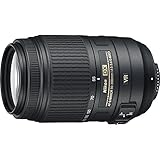
| Nikon AF-S DX 55-300mm | Telephoto add-on for a DSLR | 55-300mm f/4.5-5.6G ED VR |
| Nikon AF-S DX 16-80mm | Brighter DSLR standard zoom | 16-80mm f/2.8-4E ED VR |
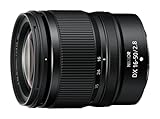
| Nikon Z DX 16-50mm | Fast zoom on Z mirrorless | Constant f/2.8, image stabilization |
| Nikon Z DX 24mm | Low light and portraits on Z | f/1.7 wide-angle prime |
| Nikon Z DX 50-250mm | Compact telephoto on Z | 50-250mm VR, image stabilization |
| Nikon AF-S DX 35mm | Fast prime on a DSLR | 35mm f/1.8G |
How to Choose
Match the mount before anything else
Titles that read AF-S DX NIKKOR with “Nikon DSLR cameras” use the F mount. Titles that read NIKKOR Z DX are for Z-series mirrorless bodies. F-mount lenses can work on Z bodies through Nikon’s mount adapter, but the reverse is not possible, so a Z-mount lens will never fit an older DSLR. Check your camera’s mount first, then filter the list.
Read the focal range as a field of view
DX sensors apply roughly a 1.5x crop, so an 18mm lens frames like a 27mm lens on full frame. For landscapes and interiors, look for a wide end near 16mm or 18mm. For distant subjects, a long end of 250mm or 300mm brings you to roughly 375mm to 450mm equivalent. Ignore the temptation to chase the biggest zoom ratio unless you truly want one lens for everything.
Aperture tells you about low light and background blur
A constant f/2.8 zoom or an f/1.7 or f/1.8 prime lets in far more light than a kit-style f/3.5-6.3 zoom. If you shoot indoors, at dusk, or want a blurred background, aim for f/2.8 or faster. Variable-aperture superzooms close down as you zoom, which is acceptable in daylight but frustrating at a school concert.
Stabilization and where budget lenses cut corners
Vibration Reduction on the zooms helps with handheld telephoto work and slower shutter speeds, and it matters most past 100mm. Primes in this group omit it, relying on wide apertures instead. Budget zooms usually give up edge sharpness at the extremes of the range and use plastic-heavy construction, so expect the best results by stopping down slightly. A renewed unit can save money but check the seller’s return terms.
If you are building a two-lens kit, the DSLR pairing of the 16-80mm f/2.8-4E and the 55-300mm spans 16mm to 300mm, and the Z pairing of the 16-50mm and 50-250mm follows the same logic with stabilization listed on both. Either way, a bright standard zoom plus a telephoto beats one slow superzoom for anyone who shoots indoors as often as outdoors.
The 8 Best Options
Nikon AF-S DX 18-300mm f/3.5-6.3G ED VR
This is the all-in-one choice for a DSLR owner who wants to leave the bag at home. The 18-300mm range covers wide scenes through distant subjects, and the VR designation signals built-in stabilization for handheld shooting. It suits trips and family events where swapping lenses is a hassle.
- Strength: a very wide focal range from one lens, so a single body-and-lens setup handles most situations.
- Strength: vibration reduction is listed, helping at the long end.
- Trade-off: the f/3.5-6.3 aperture narrows quickly, which limits indoor and evening use.
Skip it if you want shallow depth of field or consistent low-light performance.
Nikon AF-S DX 18-140mm f/3.5-5.6G ED VR (2213)
A more modest zoom range than the 18-300mm, with a faster aperture across it. It works as a step up from the lens bundled with many beginner kits for someone who wants more reach without going all the way to a superzoom. The title lists vibration reduction and autofocus for Nikon DX bodies.
- Strength: a useful walkaround range from wide to moderate telephoto.
- Strength: f/3.5-5.6 is brighter than the superzoom at the long end.
- Trade-off: it will not reach distant wildlife or field sports.
Skip it if you already own a telephoto, or if you need fast f/2.8 glass. Note that a renewed listing of this same lens also exists, which may suit tighter budgets.
Nikon AF-S DX 55-300mm f/4.5-5.6G ED VR
The natural second lens for a DSLR owner with a basic kit zoom. Starting at 55mm, it picks up where an 18-55mm leaves off and stretches to 300mm for sports, birds, and distant landmarks. Vibration reduction is listed in the title.
- Strength: serious reach for a single lens.
- Strength: pairs neatly with an existing short zoom, covering the full range between them.
- Trade-off: f/4.5-5.6 needs good light to keep shutter speeds high.
Skip it if you want one lens for everything or you shoot mostly indoors. Two listings of this lens appeared in the shortlist, and they were treated as one product.
Nikon AF-S DX 16-80mm f/2.8-4E ED VR
This is the step-up standard zoom for DSLR shooters who care about aperture. Opening at f/2.8 on the wide end and f/4 at the long end, it is noticeably brighter than the usual kit options, and the E in the name points to an electromagnetic aperture mechanism.
- Strength: a bright aperture range for a zoom of this reach.
- Strength: vibration reduction is included.
- Trade-off: the 80mm top end is short for sports or wildlife.
Skip it if you need long telephoto reach or are watching spending closely, since it sits at the premium end of the F-mount zooms here.
Nikon NIKKOR Z DX 16-50mm f/2.8
The only constant f/2.8 zoom in this group, designed for APS-C Z-series mirrorless bodies. The title highlights image stabilization and a premium build, making it a candidate for a main lens on a Z DX camera for events, travel, and video.
- Strength: constant f/2.8 holds brightness across the entire zoom range.
- Strength: image stabilization is listed for handheld shooting.
- Trade-off: it only fits Z mount, so it is useless for DSLR owners.
Skip it if your reach needs go beyond a standard range, or if you want the lightest possible kit.
Nikon NIKKOR Z DX 24mm f/1.7
A wide-angle prime with an extra-large aperture for Z mirrorless cameras. At 24mm on a DX body, the framing is a natural, slightly wide view for street scenes, group shots, and environmental portraits, and f/1.7 is plenty for dim rooms.
- Strength: f/1.7 gathers a lot of light and blurs backgrounds.
- Strength: a single fixed focal length keeps things simple and encourages deliberate framing.
- Trade-off: no zoom, so you move your feet to change composition.
Skip it if you shoot distant subjects or need a lens that adapts to changing scenes.
Nikon NIKKOR Z DX 50-250mm VR
Billed as a compact all-in-one telephoto zoom for Z DX cameras, it adds reach to a mirrorless kit without the bulk of larger lenses. Image stabilization is mentioned in the title, which helps when you are handholding at the long end.
- Strength: 50-250mm covers portraits through distant action.
- Strength: compact design suits travel.
- Trade-off: the title does not list a fast aperture, so expect it to work best in good light.
Skip it if you need a standard wide-to-tele zoom or you own a DSLR.
Nikon AF-S DX 35mm f/1.8G
A classic budget-friendly prime for DX DSLRs. The 35mm focal length acts as a roughly normal view on a crop sensor, and f/1.8 delivers shallow depth of field and capable low-light performance. It is a strong first prime for a beginner.
- Strength: bright f/1.8 aperture at an accessible tier.
- Strength: simple, light, and easy to carry.
- Trade-off: no vibration reduction listed, and no zoom flexibility.
Skip it if you need telephoto reach or are using a Z mirrorless body without an adapter.
Which One Fits Your Situation
You shoot a DSLR and want one lens for a vacation
The Nikon AF-S DX 18-300mm covers nearly every scene from a single mount. If reach matters less, the 18-140mm is the lighter, brighter alternative.
You own a Z DX camera and shoot events or video
The Nikon Z DX 16-50mm f/2.8 gives you constant brightness and stabilization, which suits moving between indoor and outdoor scenes without exposure changes.
You want better low-light shots and blurred backgrounds
Choose the Nikon AF-S DX 35mm f/1.8G on a DSLR or the Nikon Z DX 24mm f/1.7 on a Z body. Both are small, bright primes.
You are adding telephoto to an existing kit
The Nikon AF-S DX 55-300mm complements a DSLR kit lens, and the Nikon Z DX 50-250mm does the same job for Z DX bodies.
Common Mistakes
- Buying a Z-mount lens for a DSLR, or assuming F-mount lenses attach without an adapter on mirrorless.
- Chasing the longest zoom range and then discovering it is too dim for indoor use.
- Treating a renewed listing and a new listing of the same lens as different products.
- Forgetting that full-frame lenses behave differently from DX lenses on crop bodies, and mixing up the labels.
- Ignoring aperture, since a fast prime often beats a pricey zoom in dim light.
Related guides
- What Is The Best Budget Most Responsive Gaming Mouse Wired
- Low Latency Gaming Headphones Usb-C 2.4 Ghz Wireless
- Mechanical Gaming Keyboards Competitive Pc Gaming
Frequently Asked Questions
Can I use a DX lens on a full-frame Nikon?
Generally yes, but the camera typically crops the image to the smaller DX area, reducing resolution. It works as a stopgap, not a long-term plan.
Is f/2.8 worth paying more for?
If you shoot indoors, at night, or want blurred backgrounds, yes. For daylight travel and landscapes, a slower zoom is usually enough.
Do I need vibration reduction?
It helps at longer focal lengths and slower shutter speeds, so telephoto zooms benefit the most. Fast primes lean on wide apertures instead.
Which mount do I need?
Check your camera body. DSLR owners need AF-S F-mount lenses, while Z-series mirrorless owners should look at NIKKOR Z DX lenses for the native fit.