Aim improves in small, repeatable doses. A short daily routine at the same desk, with the same mouse space and the same notebook open beside the keyboard, removes the friction that makes players skip practice. Ten to twenty focused minutes before matches, a few drills written down, and a hard stop for a break will do more over a month than one long, unfocused session squeezed in whenever motivation appears. The desk matters: if the notebook is buried, the light is harsh, and a drink sits in the mouse path, the routine quietly falls apart.
None of the picks below will make anyone’s aim better on their own. Skill comes from the drills, the notes, and the rest between sessions. What the right desk gear does is protect the routine: it keeps notes visible, the practice space clear and consistent, and small accidents from ending a session early.
As an Amazon Associate, we earn from qualifying purchases.
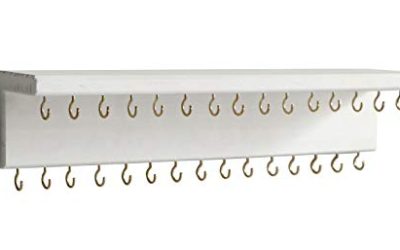
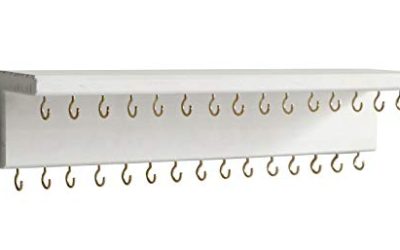
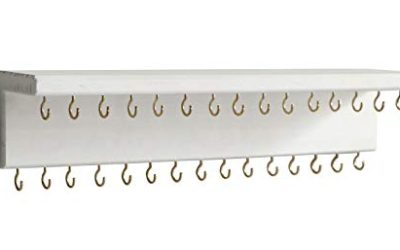
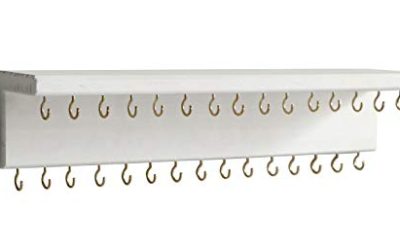
SANY DAYO Jewelry Organizer With 30 Hooks as a Notes and Light-Lead Rail
The most useful habit in aim training is writing things down: today’s drill, the sensitivity used, and one note about what felt off. The SANY DAYO organizer earns its place as a light-duty rail for exactly that. It is a jewelry organizer, and it should be treated as one — a row of small hooks suited to light items only. Hung at the back or side of the desk, its hooks hold index cards with the day’s drill list, a lanyard, and the light leads that would otherwise wander across the mouse pad.
That light-duty limit is the point of using it honestly. The hooks are for paper notes, card sleeves, and thin cables — not for power strips, charging bricks, or anything with real weight, which will bend hooks and pull the rail out of alignment. Within its limits, the rail turns the back edge of the desk into a tidy command strip, with the drill card at eye level and the surface clear for the mouse.
Visibility is everything for a training routine. A sensitivity change written on a card and hung up gets remembered; one typed into a forgotten document does not. Players who rotate between games can keep one card per game and swap the front card as needed.
Specs
- 30 small hooks on a single rail-style organizer
- Designed as a jewelry organizer; repurposed here for light-duty desk use
- For note cards, lanyards, and light cable loops only
- Not suitable for power strips, charging bricks, or heavy items
- Mounts at the back or side of a desk or on a wall
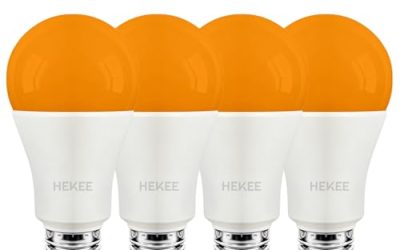
HEKEE Dusk to Dawn Bulbs A19 for Effortless Room Light

Practice sessions often happen at the same time each day, and a room that lights itself removes one more decision from the routine. The HEKEE A19 bulbs use a built-in sensor to switch on at dusk and off at dawn, so an evening practice corner is simply lit when it is time to sit down. They are plain automatic bulbs, and that plainness should be clear: these are not smart bulbs — no app, no voice control, no color changing. They are also not task lighting; a focused desk lamp is a separate purchase for players who need one.
Two honest caveats come with any sensor bulb. First, the sensor reads the light around the bulb itself, so in a windowless room or a room that stays dim all day, the bulbs may stay on far longer than expected — from the sensor’s point of view it is always close to dusk. Second, anyone planning to use them in a fully enclosed fixture should check the fixture guidance first, since enclosed fittings trap heat and are not suitable for every bulb design.
For aim training, steady ambient light matters because glare and changing brightness make a screen harder to read across a session, and a room that settles into the same light every day keeps the practice environment consistent.
Specs
- A19 bulb shape with a standard screw base
- Built-in dusk-to-dawn sensor for automatic on and off
- Plain automatic bulb: not smart, no app or voice control
- Ambient room light only; not a substitute for task lighting
- May stay on in windowless rooms; check enclosed-fixture suitability
ULANZI Super Clamp for a Phone or Small Device Mount
Following timed drills is easier when a phone timer is held still at a fixed angle instead of propped against a monitor. The ULANZI super clamp is a mount for that job: a strong clamp that grips a desk edge or shelf and holds a small device holder in place. Be clear about what is in the box — the clamp is a mount only. It includes no light, no phone, and no camera of its own, so it pairs with a device or holder the player already owns.
On a practice desk, the clamp’s best use is a phone running a session timer or a drill list, held above and behind the monitor where it can be glanced at without breaking posture. Timed drills are the backbone of short daily practice: two minutes of tracking, two minutes of flicks, a minute of rest. A timer in a fixed spot makes those blocks easy to follow and keeps the phone out of the mouse area entirely.
It also gives players who record a screen-side view for review the same framing every day, and when the session ends it simply stays put, ready for tomorrow.
Specs
- Clamp-style mount for desk edges and shelves
- Mount only: includes no light, phone, or camera
- Standard mounting point for small device holders
- Holds a phone timer or drill list clear of the mouse area
- Fixed position keeps framing consistent for review clips
tomtoc Laptop Case for Off-Desk Storage That Protects the Practice Space
A practice desk stays a practice desk only if everything outside the routine has somewhere else to go. The tomtoc laptop case gives the laptop, tablet, or a notebook-and-cables bundle a padded home in a drawer or on a shelf, so the desk surface is not doing double duty as storage. Its limits should be respected: it is a padded soft case, not a hard shell, so it protects against scratches and light knocks rather than serious drops, and it is not waterproof, so it is not the right choice for carrying gear through heavy rain.
Fit is the detail that matters most. Cases are sold by screen size, but the number that decides whether a machine fits is the internal dimensions, so buyers should compare those against the laptop’s actual measurements, including thickness with any shell fitted. A slightly roomy case is fine for desk-side storage; one that is too tight will stress zips and corners.
Within a training routine, the case plays a quiet but real role. Many players practice on the same machine they work on, and the minutes spent clearing work clutter can eat the whole session. A case that swallows the laptop and its charger at the end of the workday, and slides into the same drawer every time, turns the changeover into a one-minute habit.
Specs
- Padded soft case for a laptop, tablet, or accessories
- Soft construction: not a hard shell and not waterproof
- Protects against scratches, bumps, and light knocks
- Check internal dimensions against the device before ordering
- Works as drawer or shelf storage to keep the desk clear
JoyJolt Faye Highball Glasses for a Drink Spot That Respects the Mouse Path
Every practice desk has a drink on it eventually, and where that drink sits is a genuine performance issue. A glass beside the keyboard or anywhere inside the mouse path is one wide flick away from a spill across the pad. The JoyJolt Faye highball glasses, a six pack of 13-ounce glasses, belong in this guide with one strict rule attached: the drink goes on a side table, never beside the keyboard and never within reach of the mouse sweep. The glasses are real glass, which means they are breakable — a knocked glass does not bounce, it breaks — and any glass with a chipped rim should be retired rather than kept in rotation.
With that rule in place, the set is a sensible practice-desk companion. Breaks are part of the routine, not a reward after it: standing up every twenty minutes or so to refill a glass of water at the side table keeps hands and eyes fresh across a longer session, and the six pack means a clean glass is always available.
The honest framing matters here too. These glasses will not improve anyone’s aim, and no drinkware will. What they do is move hydration off the desk and into the break routine, keeping liquid far from the keyboard, mouse, and monitor.
Specs
- Set of six highball glasses, 13-ounce capacity each
- Real glass construction: breakable, handle with care
- Retire any glass with a chipped rim
- Rule for this setup: side table only, never in the mouse path
- Supports a stand-up-and-refill break rhythm
How to Choose Gear for a Daily Aim Training Desk
Start with the routine, not the products. Decide the session length, the two or three drills that make it up, and the time of day it happens, then choose gear that removes friction from that specific plan. Forgotten notes call for the rail first, changing room light for the ambient bulbs, and a desk that doubles as a work desk for the storage case. Buying in the order of real friction avoids a desk full of gear supporting a routine that does not exist.
Keep the practice space consistent. Aim training depends on the mouse, pad, and screen feeling identical every day, so every pick should either live in a fixed spot or leave the desk entirely during drills. If a new item forces the mouse space to shrink or shift, it does not belong in the setup.
Plan breaks as part of the session. Short practice blocks with standing breaks protect accuracy better than one long grind, and they protect hands, wrists, and eyes as well, so gear that supports the break is training equipment, not an afterthought. Finally, measure before ordering anything that must fit: case dimensions against the laptop, clamp reach against the desk edge, and rail length against the wall where it will hang.
FAQ
How long should a daily aim training session be?
For most players, ten to twenty minutes of focused drills before matches is enough to build consistency without fatigue. Short daily sessions beat occasional long ones, because the routine stays easy to start and the notes stay current. Players with more time can run two short blocks with a break between them.
Will any of this gear actually improve aim?
No product on this list will improve aim by itself. Improvement comes from repeated drills, honest notes about sensitivity and mistakes, and enough rest between sessions. The gear here only supports those habits by keeping the desk clear, the notes visible, the light steady, and drinks away from the mouse.
Where should drinks go during practice?
On a side table, out of the mouse path and away from the keyboard, every time. A glass inside the sweep area is a spill waiting for a wide flick, and real glass adds breakage to the mess. Standing up to reach the drink doubles as the regular break the routine needs anyway.
What should go in the practice notebook?
Keep it simple: the date, the drills done, the sensitivity used, and one line about what felt off. A card with the current setup hung on the rail keeps the key numbers visible during play. Reviewing the last few entries before a session tells the player which drill needs attention that day.
Final Verdict
A daily aim training routine succeeds on consistency, and consistency is a desk problem before it is a talent problem. The SANY DAYO rail keeps drill cards and light leads visible and off the pad, the HEKEE bulbs settle the room into the same light every evening, and the ULANZI clamp holds a timer where it can be seen without crowding the mouse. The tomtoc case clears work gear off the surface so practice starts on time, and the JoyJolt glasses move drinks to a side table where a spill cannot end the session. None of it creates skill — the drills, notes, and breaks do that — but together these picks build the calm corner where a daily routine can survive.
Product and ASIN Reference
| Product | ASIN |
|---|---|
| SANY DAYO jewelry organizer 30 hooks | B07QFZSVQW |
| HEKEE dusk to dawn bulbs A19 | B07HGZMYZ4 |
| ULANZI super clamp | B09C882D4M |
| tomtoc laptop case | B073TVX735 |
| JoyJolt Faye highball glasses 13 oz 6 pack | B08BB62QWT |
Related guides
More from Amazon
Programs that pair well with the guide above. Offers and eligibility are set by Amazon and may change.
Free shipping on eligible items, Prime Video and more. Eligible new members can start with a free trial.
Start a Prime free trialAd-free music streaming. Eligible new subscribers can start with a free trial.
Try Music Unlimited freeA Prime membership for ages 18-24 with a trial period. Eligibility is set by Amazon.
See Prime for Young AdultsAudiobooks and podcasts to listen to on the go. Eligible new members can start with a free trial.
Try Audible freeAs an Amazon Associate we earn from qualifying purchases.