Choosing a wide angle lens for Canon begins with a question that has nothing to do with sharpness: which mount is on your camera? Canon sells wide glass in RF for full-frame EOS R mirrorless, RF-S for APS-C mirrorless, EF for full-frame SLRs and EF-S for APS-C SLRs, and none of these swap freely. After that comes the real creative decision, which is how wide you need to go for landscapes, interiors, vlogs or architecture.
This guide is written for travelers, real estate shooters, vloggers and landscape hobbyists who want to move past a kit zoom. The nine options below mix primes, ultra-wide zooms, an L-series pro lens, a renewed unit and a screw-on accessory, so the sections that follow explain which listed specs separate them in 2026.
Our Top Picks
Top 3 picks at a glance
Quick Picks
As an Amazon Associate we earn from qualifying purchases at no extra cost to you.


| Product | Best for | Key spec from title |
|---|---|---|
| Canon RF 16mm F2.8 STM | Compact ultra-wide prime | 16mm F2.8, RF mount |
| Canon RF-S 10-18mm F4.5-6.3 | Vlogging on APS-C mirrorless | 10-18mm, IS STM |
| Canon EF-S 10-18mm f/4.5-5.6 | APS-C SLR landscapes | 10-18mm, IS STM |
| Canon RF 14-35mm F4 L | Premium full-frame wide zoom | 14-35mm F4, L, IS USM |
| Canon EF-S 10-22mm f/3.5-4.5 | Brighter APS-C SLR ultra-wide | 10-22mm, f/3.5-4.5, USM |
| Canon EF 16-35mm f/2.8L II (Renewed) | Pro SLR wide zoom on a plan | 16-35mm f/2.8L II USM |
| Altura Photo 58mm Wide Angle | Cheap add-on experiment | 58mm wide angle with macro |
| Canon RF 28mm F2.8 STM | Pancake-style everyday wide | 28mm F2.8, full-frame RF |
| Canon RF-S 10-18mm Kit (3 Items) | Zoom plus filter and cap keeper | 10-18mm with UV filter |
How to Choose
Mount and sensor size
RF and RF-S lenses fit EOS R bodies; EF and EF-S lenses fit SLRs. EF glass mounts on RF bodies through Canon’s adapter, while EF-S lenses are made for APS-C sensors and crop on full frame. RF-S lenses are designed for APS-C bodies, so a 10-18mm RF-S frames like roughly 16-29mm on full-frame equivalent.
How wide is wide enough
Ultra-wide begins near 16mm on full-frame and 10mm on APS-C. A 24mm or 28mm lens is a gentle wide that suits street and travel. Real estate and architecture benefit from the 10-16mm range on APS-C, or 14-16mm on full frame, because tight rooms need generous coverage without dramatic stretching at the edges.
Aperture and stabilization
F2.8 primes help in dim interiors and for astrophotography; F4 to F6.3 zooms are fine for daylight landscapes on a tripod. Stabilization matters for handheld video and for slow shutter speeds in cathedrals or markets. Check the title for IS if you shoot handheld.
What to ignore and where budget lenses cut corners
Ignore accessory claims such as a macro attachment, which usually trades edge sharpness for novelty. Budget wide lenses typically show softer corners, more distortion and slower autofocus, and screw-on converters reduce quality further. Renewed units can be a fair route if the return terms are clear.
One extra tip: pick the widest lens you will actually use, not the widest available. Extreme ultra-wide views stretch people near the edges and make distant mountains look small. Many landscape photographers find 16mm on full frame or 10-12mm on APS-C is the sweet spot, and hold a longer lens for compression shots.
The 9 Best Options
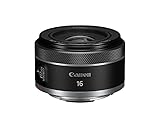
Canon RF 16mm F2.8 STM
A compact fixed-focal RF lens that the title calls an ultra wide-angle for EOS R series mirrorless cameras. Its F2.8 aperture helps in dim places and it suits travelers and vloggers who value light weight. A prime keeps the kit small for walking days. Travelers photographing narrow streets, cathedral interiors or a crowded market will appreciate how much of the scene fits without stepping into the road, and the small size makes it easy to leave mounted.
- Strength: bright F2.8 in an ultra-wide prime.
- Strength: STM focusing suited to video and stills.
- Trade-off: fixed focal length means no zoom flexibility.
Skip it if you want to reframe without moving your feet.
Canon RF-S 10-18mm F4.5-6.3 IS STM
An ultra-wide zoom for APS-C EOS R bodies, described in the title as great for vlogging and selfies, compact and lightweight. It targets creators who need a wide, stabilized lens that does not weigh down a small camera. A creator filming at arm’s length can fit the face and the background in one frame, which is the practical reason this focal range became popular for handheld video.
- Strength: wide zoom range with image stabilization.
- Strength: compact build for travel and video.
- Trade-off: variable aperture is slow in dim rooms.
Skip it if you shoot full frame, since it is made for APS-C.
Canon EF-S 10-18mm f/4.5-5.6 IS STM
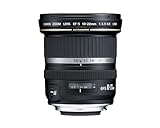
This EF-S ultra-wide zoom lists image stabilization and STM autofocus for landscape photography. It fits owners of APS-C Canon SLRs, such as the Rebel line, who want a wider view than the kit lens gives. Hikers and travelers photographing valleys or old town squares will find the 10mm end dramatic, while the stabilization helps when light fades near dusk.
- Strength: stabilized ultra-wide zoom for APS-C.
- Strength: slightly brighter long end at f/5.6.
- Trade-off: EF-S fits APS-C only, and mirrorless owners need an adapter.
Skip it if you plan to move to full frame, because the lens will not cover that sensor properly.
Canon RF 14-35mm F4 L IS USM
The L-series wide zoom for full-frame EOS R bodies gives a constant F4 aperture, image stabilization and USM autofocus. It suits professionals and serious enthusiasts shooting landscapes, architecture and events. It sits in the premium tier. Architecture shooters like this range because 14mm captures a whole facade from across a street, and the 35mm end turns the same lens into a standard focal length for people and details.
- Strength: constant F4 across 14-35mm.
- Strength: L-series build with stabilization.
- Trade-off: costly compared with the other zooms listed.
Skip it if you need F2.8 for night skies, or if you want a lighter lens for all-day hikes.
Canon EF-S 10-22mm f/3.5-4.5 USM
An older EF-S ultra-wide zoom for APS-C digital SLRs, with a brighter aperture at the wide end than the 10-18mm models. Landscape and interior shooters on SLRs use this range for dramatic perspective. Because it targets APS-C bodies, the effective view lands near a full-frame 16-35mm, so it behaves like a classic landscape zoom for photographers who have not left the crop-sensor world.
- Strength: f/3.5 at the widest setting.
- Strength: USM focusing in an APS-C wide zoom.
- Trade-off: no stabilization is listed.
Skip it if you shoot handheld in low light.
Canon EF 16-35mm f/2.8L II USM (Renewed)
A renewed professional wide zoom for EF cameras with a constant f/2.8 aperture. It fits full-frame SLR photographers who want a fast wide zoom for events and night work and are comfortable with a refurbished unit. Wedding and event photographers have long used this focal range for dance floors and group shots, and a renewed unit can bring that capability into reach for someone building a first pro kit.
- Strength: constant f/2.8 with L-series quality.
- Strength: wide 16-35mm range on full frame.
- Trade-off: renewed condition and no stabilization listed.
Skip it if you want new-in-box assurance.
Altura Photo 58mm Wide Angle Lens with Macro
A screw-on wide-angle attachment with macro, listed for Canon Rebel T7, T6 and EOS 90D bodies. It is the entry point for people who want to experiment with wide framing at a very low tier. It is an accessory, not a full lens system. Think of it as a low-risk way to learn whether you enjoy wide perspectives before committing to a proper lens, and expect vignetting or softness near the frame edges.
- Strength: very low cost for a wide look.
- Strength: includes a macro attachment.
- Trade-off: accessory optics usually soften edges.
Skip it if image quality is your priority, or if you shoot a body other than the models named in the listing.
Canon RF 28mm F2.8 STM
A small RF prime for full-frame cameras, listed with a 28mm field of view and F2.8 aperture. It suits street, travel and everyday scenes where a gentle wide is enough. Photographers who carry a camera daily often prefer a small prime like this one because a light kit gets used more often than a heavy one.
- Strength: pocketable, light RF prime.
- Strength: F2.8 aperture and STM autofocus.
- Trade-off: only mildly wide, so tight interiors will not fit.
Skip it if you want dramatic ultra-wide perspective.
Canon RF-S 10-18mm Kit (3 Items)
The same RF-S 10-18mm f/4.5-6.3 IS STM sold with a UV filter and a lens cap keeper. It suits first-time buyers who want basic protection included. A front filter guards the glass from dust and scratches on trips, and a cap keeper stops the lens cap from disappearing in a bag.
- Strength: ultra-wide zoom with stabilization.
- Strength: protective filter and cap keeper included.
- Trade-off: the extras add little for experienced shooters.
Skip it if you already own filters.
Which One Fits Your Situation
You vlog on an APS-C mirrorless body
The Canon RF-S 10-18mm is the natural choice, pairing stabilization with a compact body. The kit version with a UV filter suits beginners who want protection from day one.
You photograph landscapes on full frame
The Canon RF 14-35mm F4 L gives a flexible wide-to-standard range with L-series build. Those on a tighter plan with an SLR could consider the renewed EF 16-35mm f/2.8L II instead.
You own an older APS-C SLR
The Canon EF-S 10-18mm IS STM brings ultra-wide coverage with stabilization, and the EF-S 10-22mm adds a brighter aperture.
You want a tiny everyday wide
The Canon RF 16mm F2.8 or RF 28mm F2.8 keeps the camera light for travel. Pick the 16mm if you want sweeping scenery and the 28mm if you mostly photograph friends, food and street scenes where extreme perspective would look odd.
Common Mistakes
- Buying an EF-S or RF-S lens for a full-frame body.
- Expecting a screw-on wide attachment to match true lens quality.
- Choosing by zoom range when a fast prime suits the scene better.
- Ignoring stabilization for handheld video.
- Overlooking edge distortion in tight interior shots.
Related guides
- What Is The Best Budget Most Responsive Gaming Mouse Wired
- Low Latency Gaming Headphones Usb-C 2.4 Ghz Wireless
- Mechanical Gaming Keyboards Competitive Pc Gaming
Frequently Asked Questions
What counts as a wide angle lens?
On full frame, anything below roughly 35mm. Ultra-wide begins near 16mm and below.
Can I use EF lenses on mirrorless Canon bodies?
Yes, with Canon’s mount adapter. EF-S lenses crop on full-frame bodies, which wastes resolution and narrows the view, so match the lens to your sensor size when you can.
Is F2.8 necessary for landscapes?
Usually not. Landscapes are often shot at F8 or smaller on a tripod. Fast apertures matter for night skies and dim interiors.
Are wide-angle attachments worth it?
They are fine for experimenting. For consistent results, a dedicated lens is a better path, because sharp corners, clean autofocus and proper coatings all come from a real lens design rather than an add-on.