Sports photography punishes the wrong lens quickly. A soccer touchline, a baseball outfield and a school gym each demand a different reach and a different aperture, and Canon’s lineup splits across two mounts: RF for mirrorless EOS R bodies and EF for older SLRs. The first decision this keyword implies is not which lens is sharpest, but which mount your body uses and how far away the action happens.
This guide is for parents shooting youth games, hobbyists stepping up from a kit zoom, and anyone covering outdoor events with a Canon body. Every lens below is a telephoto zoom, so the comparison comes down to focal range, maximum aperture, stabilization and mount. Here is how those listed specs line up in 2026.
Our Top Picks
Top 3 picks at a glance
Quick Picks
As an Amazon Associate we earn from qualifying purchases at no extra cost to you.





| Product | Best for | Key spec from title |
|---|---|---|
| Canon RF100-400mm F5.6-8 | Field sports on a mirrorless body | 100-400mm, IS USM, RF mount |
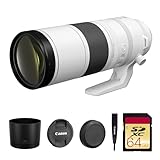
| Canon RF200-800mm F6.3-9 | Distant action and wildlife | 200-800mm, IS USM |
| Canon EF 75-300mm III (Renewed) | Entry SLR budgets | 75-300mm f/4-5.6, EF mount |
| Canon RF70-200mm F2.8 L | Indoor and night games | F2.8, IS USM, L series |
| Canon RF200-800mm Bundle | Reach plus accessories | 200-800mm, 64G included |
| Canon RF75-300mm F4-5.6 | Low-cost mirrorless telephoto | 75-300mm, RF mount |
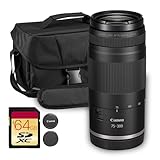
| Canon RF75-300mm Bundle | Starter kit buyers | 75-300mm, 64G included |
| Canon EF 75-300mm III | SLR owners on a tight plan | f/4-5.6 III, SLR mount |
| Canon EF 75-300mm III (Black) | Same lens, alternate listing | f/4-5.6 III, black |
| Canon RF70-200mm F4 L | Lighter L-series daytime zoom | F4, IS USM, L series |
How to Choose
Focal length and distance to the action
For a standard soccer pitch, 200mm gets you to midfield play from the sideline and 400mm reaches the far goal. Basketball and volleyball from the baseline work with 70-200mm. Track and baseball outfield shots favor 300mm and above. On APS-C bodies, multiply focal length by roughly 1.6 for the effective field of view, which stretches a 300mm lens further.
Maximum aperture and lighting
Aperture controls how much light reaches the sensor, and sports need fast shutter speeds to freeze motion. An F2.8 lens suits dim gyms and evening fields; F5.6 to F8 zooms are fine in daylight but force high ISO as clouds roll in. If the venue is lit by overhead lamps, treat F2.8 as the dividing line.
Mount compatibility and adapters
RF lenses fit EOS R mirrorless bodies only. EF lenses fit SLRs directly and mount on RF bodies through Canon’s mount adapter. Confirm your body before looking at any specification. Buying a lens that does not fit is the most expensive mistake in this category.
Stabilization, build and what to ignore
Image stabilization helps with shaky handholding at long focal lengths, but it does not freeze a sprinting player; shutter speed does that. Look for IS in the title on any lens past 200mm. Ignore bundle extras such as memory cards when comparing optics. Budget zooms usually cut corners on autofocus speed, aperture and stabilization, so expect slower tracking on the older 75-300mm designs.
One more planning note: sports shooters often underestimate the cost of weight. A lens you can hold at eye level for ninety minutes will produce more usable frames than a bigger one that ends up on a monopod you forgot to pack. Match the lens to your stamina as well as your subject.
The 10 Best Options
Canon RF100-400mm F5.6-8 IS USM
This RF-mount telephoto zoom covers 100-400mm with image stabilization, listed for EOS R series mirrorless cameras. It targets field-sport shooters who want serious reach without moving into the heavier super-telephoto tier. The variable F5.6-8 aperture favors bright daylight games. A parent covering a Saturday soccer schedule on a sunny pitch is the natural fit, since the zoom range lets you frame a corner kick and then a breakaway without swapping glass.
- Strength: 400mm reach for far-side action.
- Strength: image stabilization with USM focusing.
- Trade-off: narrow aperture at the long end limits evening use.
Skip it if you shoot mainly in indoor arenas.
Canon RF200-800mm F6.3-9 IS USM
A super-telephoto zoom that the title ties to wildlife, nature and outdoor sports. It reaches from 200mm to 800mm, which suits large outdoor venues, motorsport and long-distance shots. The listing calls it compact and light for its range. That matters on a full-day tournament, where a heavier super-telephoto would leave you tired by the final match and tempt you to put the camera down.
- Strength: extreme 800mm reach.
- Strength: image stabilization on a mirrorless mount.
- Trade-off: F6.3-9 needs plenty of daylight.
Skip it if your subjects are close, such as court sports.
Canon EF 75-300mm III (Renewed)
The renewed EF 75-300mm f/4-5.6 III is a telephoto zoom for Canon SLRs. It suits budget-minded parents with an older body who want a first long lens. Renewed status means a refurbished unit, so confirm return terms. It is the sort of lens a family might buy for a child’s first season, learning panning technique before committing to something more capable.
- Strength: 300mm reach at a modest tier.
- Strength: EF mount fits SLRs natively.
- Trade-off: a renewed unit and a slow variable aperture.
Skip it if you want new stock or stabilization, which the title does not mention.
Canon RF70-200mm F2.8 L IS USM
The L-series F2.8 zoom is the pro-grade pick for indoor and low-light sports. Its constant aperture, image stabilization and USM focusing match the demands of gyms and night fields. The title also names sports and landscape photography. Wedding and event shooters who also cover indoor games often settle on this focal range because one lens handles the stage, the court and the portrait line.
- Strength: fast F2.8 aperture throughout the range.
- Strength: L-series build with image stabilization.
- Trade-off: 200mm tops out short for large fields and sits in the premium tier.
Skip it if you need more than 200mm of reach.
Canon RF200-800mm Bundle
This bundle packages the RF 200-800mm F6.3-9 with accessories, including a 64G item named in the listing. It targets wildlife, sports and birding shooters who want the lens and extras in one purchase. The optic matches the earlier RF200-800 listing. Compare the two on the extras and the seller rather than the glass, since the title gives no reason to expect a difference in optical behavior.
- Strength: 800mm full-frame super-telephoto reach.
- Strength: bundled accessories save a separate order.
- Trade-off: the bundle likely costs more than the lens alone.
Skip it if you already own memory cards and accessories.
Canon RF75-300mm F4-5.6
A compact telephoto zoom for EOS R mirrorless bodies. It gives 300mm reach at a lower tier than the L-series options, which suits casual youth sports and first telephoto buyers. The title does not mention stabilization. For a casual shooter who mostly photographs midday games with plenty of sun, that omission may be tolerable, but shaky hands at 300mm will show in softer frames.
- Strength: RF mount with 300mm reach.
- Strength: simple, accessible telephoto step-up.
- Trade-off: no stabilization listed and a slower aperture.
Skip it if you shoot fast action in changing light.
Canon RF75-300mm Bundle
This bundle pairs the RF 75-300mm F4-5.6 with a 64G accessory. The listing frames it for sports, wildlife, travel and everyday photography with smooth autofocus. It suits someone assembling a first mirrorless sports kit. Because the extras arrive together, it removes a few small decisions for a beginner who is still learning which accessories matter.
- Strength: lens plus extras in one listing.
- Strength: versatile 75-300mm range.
- Trade-off: the optic is identical to the standalone version.
Skip it if you only want the lens.
Canon EF 75-300mm III
The standard listing of the EF 75-300mm f/4-5.6 III for Canon SLR cameras. It is a familiar budget telephoto that gets beginners to 300mm without a big outlay. It fits SLRs directly. Many buyers use it on older bodies that have been in a closet for years, which makes it a low-commitment way to try telephoto sports before upgrading anything else.
- Strength: 300mm reach on an SLR.
- Strength: simple EF mount compatibility.
- Trade-off: dated design with slow, variable aperture.
Skip it if you shoot mirrorless without an adapter.
Canon EF 75-300mm III (Black)
Another listing of the same EF 75-300mm f/4-5.6 III, noted as black. Buyers choose between this and the standard listing based on availability and seller terms, since the title shows no spec difference. Read the seller notes carefully, because a cosmetic color label tells you nothing about condition, packaging or return policy.
- Strength: same 300mm telephoto range.
- Strength: SLR-ready EF mount.
- Trade-off: no distinguishing features from the other listing.
Skip it if you want stabilization or a faster aperture.
Canon RF70-200mm F4 L IS USM
The F4 L-series version offers 70-200mm with image stabilization and USM focusing for EOS R bodies. It is the lighter, more affordable cousin of the F2.8 model, aimed at daytime outdoor sports. Track meets, tennis and bright-field baseball are realistic uses, and the 200mm end is enough for most events where you can stand near the boundary line.
- Strength: L-series optics with image stabilization.
- Strength: constant F4 aperture beats variable zooms.
- Trade-off: F4 trails F2.8 in dark venues.
Skip it if your games run into the evening.
Which One Fits Your Situation
Youth soccer on a mirrorless body
The Canon RF100-400mm reaches across the pitch and includes stabilization, which fits a weekly sideline routine. It also leaves room to upgrade later, since the mount carries over to future bodies.
Indoor basketball or gymnastics
Choose the Canon RF70-200mm F2.8 L for its wide aperture, which keeps shutter speeds fast under gym lighting. The trade is price and weight, so it suits someone shooting indoor events regularly rather than once a season.
Older SLR and a small budget
The Canon EF 75-300mm III is the entry route, giving 300mm reach on an EF-mount body. Buyers on this route should plan to shoot in good light and accept slower autofocus.
Motorsport or distant outdoor events
The Canon RF200-800mm gives the longest range here, suited to large venues and bright light.
Common Mistakes
- Ordering an RF lens for an EF-mount SLR, or the reverse, without checking the mount.
- Choosing a long, slow zoom for an indoor gym where aperture matters more.
- Relying on stabilization to freeze fast players instead of raising shutter speed.
- Paying extra for a bundle when the extras are already owned.
- Ignoring the 1.6x crop factor on APS-C bodies when estimating reach.
Related guides
- What Is The Best Budget Most Responsive Gaming Mouse Wired
- Low Latency Gaming Headphones Usb-C 2.4 Ghz Wireless
- Mechanical Gaming Keyboards Competitive Pc Gaming
Frequently Asked Questions
What focal length is best for field sports?
Aim for 200-400mm on soccer and football fields. Smaller venues and court sports work well with 70-200mm.
Do I need an F2.8 lens?
Only for dim indoor or night venues. In daylight, F4 to F5.6 zooms are workable and lighter.
Can EF lenses work on mirrorless Canon cameras?
Yes, through Canon’s EF-to-RF mount adapter. Verify compatibility for your exact body before buying.
Is a renewed lens a sound choice?
It can be, provided the seller offers clear return terms. Treat it as a budget route and inspect it on arrival.