
Flying a virtual aircraft well demands hardware that translates fine motor intent into smooth control inputs. Most players reach for a gamepad or mouse and keyboard first, then hit a wall when precision maneuvering becomes the bottleneck. The best flight sticks for pc flight simulators solve this by offering proportional pitch, roll, and yaw inputs that digital controls simply cannot replicate, even in modern titles like Microsoft Flight Simulator 2024 or DCS World.
What separates a genuinely useful stick from a cheap toy is centering accuracy, axis resolution, throttle ergonomics, and software remapping depth. A stick that drifts after thirty minutes of use or forces you into a single fixed grip position will frustrate you regardless of price. This roundup covers eight options spanning budget, mid-range, and premium tiers, each evaluated on how they handle sustained sim sessions rather than unboxing excitement.
As an Amazon Associate we earn from qualifying purchases at no extra cost to you. Product prices and availability are accurate as of the date shown and are subject to change.




Top 3 picks at a glance
Quick Picks
| Product | Best for | Price |
|---|---|---|
| Thrustmaster T-Flight Hotas X | Entry-level HOTAS value | $72.48 |
| Logitech G X56 | Programmable control depth | $199.99 |
| Thrustmaster T-Flight Hotas One | Xbox-to-PC crossover | $95.99 |
| PXN 2113PRO | Absolute lowest price | $49.99 |
| Thrustmaster T.Flight Hotas 5 | MSFS Edition bundling | $109.99 |
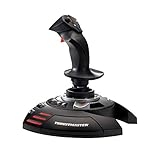
| Thrustmaster T-Flight Stick X | Single-stick minimalists | $49.99 |
| Thrustmaster T16000M FCS Space Sim Duo | Dual-stick space combat | $149.99 |
| Thrustmaster T16000M FCS | Precision on a mid-range budget | $79.99 |
How We Picked
We evaluated each stick on four criteria: axis precision under repeated use, build quality relative to price, software configurability for button remapping, and whether the form factor supports comfortable long-session ergonomics. A stick scoring high on price but failing on centering consistency or offering no software layer was excluded or ranked low. We also weighted how well each product pairs with popular PC sim titles, since a stick that requires awkward third-party driver hacks loses points even if hardware quality is otherwise solid.
The 8 Best Flight Sticks For Pc Flight Simulators in 2026
Thrustmaster T-Flight Hotas X
This remains the most practical first HOTAS setup for anyone learning instrument flying. The separate throttle quadrant with adjustable friction gives meaningful resistance, and the stick itself centers predictably through extended sessions. Two pros: the grip detaches and remounts on the left for left-hand throttle use, and the twelve programmable buttons handle common MSFS keystrokes without needing external software. The con is axis resolution; fine aileron trimming at low speeds can feel imprecise compared to Hall-effect alternatives. Skip this if you fly combat sims at high G-turn speeds where millimeter-level precision matters.
Logitech G X56
The X56 targets players who want maximum programmability without crossing into four-figure territory. With 189 programmable controls spread across two units, complex aircraft like the F-14 or F-22 become manageable through layered profiles. Two pros: spring-loaded stick options let you tune resistance, and RGB zones serve as functional mode indicators during nighttime flying. The con is sheer physical size; this setup demands a dedicated desk area and feels like overkill for casual MSFS sightseeing. Skip this if you have limited desk space or fly primarily light GA aircraft with fewer systems to manage.
Thrustmaster T-Flight Hotas One
This stick earns its spot for players who split time between Xbox and PC. The modular design adapts cleanly between both platforms, and the grip angle suits a relaxed arm position during long cross-country flights. Two pros: native Xbox compatibility means zero configuration when switching platforms, and the throttle quadrant includes a realistic detent system for flaps and spoilers. The con is button count; twelve total controls means you will still rely on keyboard shortcuts for complex aircraft. Skip this if you play exclusively on PC and want deeper mapping without a second device.
PXN 2113PRO
At $49.99 this is the cheapest functional flight stick on the list, and it proves that budget hardware has improved noticeably. The USB plug-and-play setup works with MSFS out of the box, and the ergonomic grip is more comfortable than its price suggests. Two pros: it occupies minimal desk space, and the trigger plus rotary hat switch cover basic trim and view commands. The con is centering drift; after an hour of use the neutral point shifts slightly, requiring occasional recalibration. Skip this if you need consistent precision or plan to use it beyond an initial trial period.
Thrustmaster T.Flight Hotas 5
Bundled with Microsoft Flight Simulator content, this edition appeals to players who want a confirmed working setup without verifying compatibility themselves. The stick itself shares its DNA with the Hotas X but adds refined grip texture and slightly better axis damping. Two pros: the included MSFS Edition content removes setup friction, and the throttle quadrant features realistic detents for military and airliner aircraft. The con is value overlap; functionally similar to the Hotas X at a higher price, so the premium is mostly branding and bundle content. Skip this if you already own MSFS and want the cheapest comparable Thrustmaster option.
Thrustmaster T-Flight Stick X
A single-stick solution for players who fly with a keyboard for throttle and want the stick purely for flight attitude control. The ergonomic shape fits naturally in a right-hand resting position, and the base is compact enough for small desks. Two pros: the twelve-button layout covers essential trim, rudder, and view commands, and the integrated rudder hat works without a foot pedal. The con is the lack of a throttle quadrant; you must assign thrust to keyboard or mouse wheel, which breaks immersion during approach and landing. Skip this if you want a true hands-on-throttle-and-stick workflow.
Thrustmaster T16000M FCS Space Sim Duo
The Space Sim Duo ships two Hall-effect sticks designed for six-degree-of-freedom control in titles like Elite Dangerous and Star Citizen. Each stick operates independently, letting you strafe, roll, and translate simultaneously in ways a single stick cannot manage. Two pros: Hall-effect sensors eliminate drift permanently, and the dual configuration unlocks full 6DOF without keyboard workarounds. The con is the $149.99 price and desk footprint; two sticks plus cables demand significant surface area. Skip this if you fly primarily conventional aircraft rather than space sims, since a single stick serves those genres better.
Thrustmaster T16000M FCS
The FCS series introduces Hall-effect technology at a mid-range price, and this single-stick version makes that technology accessible without the duo footprint. The stick centers perfectly indefinitely, and the adjustable ergonomic grip tilts to match your arm angle. Two pros: Hall-effect axes never develop the drift that plagues potentiometer sticks, and the included software lets you build complex per-aircraft profiles. The con is the sparse button count compared to HOTAS pairs; you will lean on keyboard for systems management. Skip this if you want a complete cockpit-style setup rather than a precision single-stick experience.
Buying Guide
Hall-Effect vs. Potentiometer Axes
Potentiometer-based sticks use physical contact to read position, which means the wiper wears over time and centering drifts. Hall-effect sticks use magnetic sensors with no contact, so they never drift. For PC flight simulators specifically, the difference is most noticeable during long cross-country flights where you hold a slight control input for hours. If your budget allows $70 or above, prioritize Hall-effect technology. Below that price, expect recalibration every few sessions.
HOTAS Configuration and Desk Real Estate
A true HOTAS setup separates stick and throttle into two units, enabling hands-on-throttle-and-stick control critical for combat and airliner operations. Single-stick designs require keyboard or pedal input for thrust, which interrupts flow during landings and power management. Measure your desk before buying a two-unit set; the Logitech X56 alone spans nearly two feet. For small desks, a single-stick approach paired with a keyboard for thrust remains the practical compromise.
Software Mapping Depth and Game Profiles
The hardware defines your axes and buttons, but software determines whether you can assign those controls per aircraft. Microsoft Flight Simulator handles generic mappings well, but DCS World demands dozens of bindings per cockpit. Look for sticks with dedicated profile software that saves configurations directly to the device. Without this, you will rebind controls every time you switch aircraft or titles, which erodes immersion quickly.
Our Verdict
The Thrustmaster T16000M FCS is the top pick for most PC flight simulator players. It delivers drift-free Hall-effect precision at a price that leaves room for pedals or a secondary input device, and its single-stick form factor fits nearly any desk. For budget buyers, the Thrustmaster T-Flight Hotas X at $72.48 provides a complete HOTAS experience that remains genuinely usable for airliner workflows. The one scenario where another product wins: if you fly space sims requiring six degrees of freedom, the T16000M FCS Space Sim Duo is the only option on this list that handles it properly without keyboard translation.
FAQ
Do I need a throttle quadrant or is a single stick enough?
A single stick works well for arcade-style or casual flying where thrust changes are infrequent. A throttle quadrant becomes important once you fly realistic airliners or military aircraft that require power management during every approach. If you fly MSFS on scheduled routes, the dedicated throttle pays for itself in reduced frustration.
Will any of these sticks work without installing proprietary software?
All eight products here function as generic HID devices that Microsoft Flight Simulator and most other PC titles recognize automatically. However, without the manufacturer software you lose button remapping flexibility and profile management. For basic flight, plug-and-play is sufficient; for complex cockpits, install the software.
How long do potentiometer flight sticks typically last before drift becomes noticeable?
Most potentiometer sticks show measurable centering drift between two and five years of regular use, depending on session length and storage conditions. Light or moderate use extends this window considerably. Hall-effect sticks eliminate this failure mode entirely, which is the main argument for paying more upfront.
Can I use an Xbox-compatible stick on PC without extra adapters?
Yes. The Thrustmaster T-Flight Hotas One and similar Xbox-compatible sticks connect via USB and function natively on PC through Microsoft’s XInput protocol. No adapters are needed, though some PC titles may require you to select the controller profile manually within their settings menu.
Related guides
- How to Choose Flight Sticks for PC Flight Simulators: What Actually Matters
- How to Choose Linear Keyboard Switches for Smooth Gaming: What Actually Matters
- How to Choose Binaural Beats Headphones for Deep Work: What Actually Matters
- How to Choose Lubed Linear Switches for Quiet Typing: What Actually Matters

