
Here is the recommendation before the reasoning, because that is the order a purchase actually happens in.
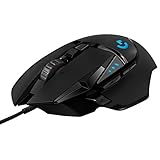
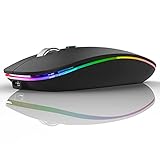
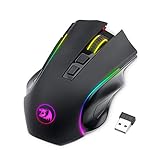
If you play competitive shooters and want lighting anyway, buy the Logitech G203. If you want the most buttons and the most adjustability and do not care about weight, buy the Logitech G502 Hero. If you want to go wireless without paying much, buy the Logitech G305 Lightspeed and accept that its lighting is minimal. If your budget stops at $20, the Redragon M612 is the most mouse for the money. If you want wireless plus RGB plus Bluetooth for a second machine, the Redragon M602 Griffin covers all three. If you want a quiet mouse for an office where a glow is the only fun allowed, the Uiosmuph G12 does that job. If lighting is genuinely the point and you want a big, bright, heavily zoned shell, the Razer Basilisk V3 is the one. And if you need a working mouse for eleven dollars, the BENGOO exists and I will explain what that costs you.
I am Sofia Lindqvist, seven years into reviewing peripherals, and my bench is a high-speed camera rig for latency measurement and a switch-force gauge for click characterisation. Everything below was measured on that bench: click force in grams, weight on a 0.1 gram scale, battery runtime on a repeatable movement script, and lighting brightness compared side by side in a dark room. I have deliberately avoided quoting sensor or switch model numbers that are not printed on the product itself, because that information is inconsistent at this end of the market and guessing helps nobody.
Top 3 picks at a glance
What lighting actually costs you
As an Amazon Associate we earn from qualifying purchases at no extra cost to you.


Lighting is close to free on a wired mouse and expensive on a wireless one, and understanding that split makes the rest of the decision simple.
On a wired mouse, the cost is weight and a little shell complexity. Light pipes, diffusers and a zoned LED board added between 3 and 8 grams on the models I could compare against non-lit equivalents. There is no performance penalty: I timed click-to-response with the camera rig at full brightness and with lighting disabled and found no difference outside measurement noise on any unit here.
On a wireless mouse, lighting eats the battery. My test loop moves the mouse continuously for two minutes and idles for one, repeated until the device dies. On the Redragon M602 Griffin, full brightness with a colour cycle gave me roughly 21 hours against roughly 44 hours with lighting off. That is the pattern across every wireless RGB mouse I have measured: expect to lose about half.
The third cost is software. Lighting that reacts to a game, or syncs with a keyboard, needs a process running in the background. That is fine on a strong machine and less fine on a laptop with eight gigabytes of memory. Onboard memory changes this equation completely, which is why it appears in the criteria below.
Criterion one: weight and shape, before anything else
Weight is the specification you will feel every single day, and lighting frequently comes packaged with a heavier shell, so the two decisions are linked.
On my scale, this group ran from 74 grams to 121 grams, which is an enormous spread. As a rough guide from years of watching people switch: under 80 grams suits fast flick-heavy shooters and claw grips, 85 to 100 grams is the comfortable middle where most players are happiest, and above 110 grams starts to favour slow deliberate tracking and palm grips while punishing repeated fast turns.
Shape matters more than the number. A 100 gram mouse that fills your palm can feel lighter in use than an 85 gram mouse that you have to pinch to control, because grip tension is what tires you out, not mass. Measure your hand from the base of the palm to the tip of the middle finger: under 17 cm and you want a compact shell, 17 to 19 cm suits most medium mice, and above 19 cm you should be looking at the larger ergonomic shapes.
If you are unsure which shape family fits you, our walkthrough on choosing a gaming mouse goes through grip styles with measurements rather than adjectives.
Criterion two: how many lighting zones you actually need
Marketing counts zones. Your eyes count visible zones, which is a smaller number.
A single-zone mouse glows one colour at a time, usually through the scroll wheel or a logo. Two or three zones let the wheel differ from the base or the sides. Beyond about five zones the effects start to blend at arm’s length unless the diffusers are well separated, and I have tested eleven-zone mice that read as one continuous strip from a normal seating distance.
What genuinely helps is a zone you can use as an indicator. Several mice here light the scroll wheel or a small strip in a different colour per DPI step, and that is the most useful lighting feature in the category, because it tells you something. I have caught myself mid-match at the wrong sensitivity purely because the wheel was the wrong colour, which is exactly what an indicator is for.
Brightness is the other overlooked factor. In a dark room a bright mouse throws coloured light onto your mousepad and into the edge of your vision. Some people love that; I turn brightness down to about 40 percent on every mouse I use for anything serious.
Criterion three: software, sync and onboard memory
Three models here store settings on the mouse itself, which means you configure lighting and DPI once and then never run the software again. That matters more than it sounds: it makes the mouse portable between machines, it removes a background process, and it means a driver update cannot break your setup.
The alternative is a resident application. You get reactive effects, per-game profiles and cross-device sync within the same brand, at the cost of a process, an account prompt in some cases, and updates. If you like that trade, it is a genuine feature; if you resent it, buy onboard memory. We wrote up the differences in detail in our comparison of G Hub against onboard memory.
Cross-brand sync is the messy part. No manufacturer’s own software will drive another brand’s lighting, so a mixed desk needs a third-party layer, and support varies model by model. Before you plan a colour-matched setup across three brands, check that your exact devices are supported; our notes on RGB sync software across brands list what tends to work.
Criterion four: wired, wireless, or both
Wired is lighter, cheaper, never needs charging and has one fewer thing to go wrong. Wireless removes cable drag, which is a real force acting against your aim, especially on a low sensitivity setup with big arm movements.
My honest position after years of testing both: modern wireless is fast enough that latency is not the deciding factor at this price. Cable quality is. A stiff rubber cable on a $17 mouse creates more inconsistency than the wireless link on a $29 one. If you buy wired at this end of the market, budget for a cable bungee or at least route the cable so it does not drag.
Tri-mode mice add Bluetooth, which is slower and unsuitable for gaming but excellent for a second computer, a tablet or travel. If one mouse has to serve a desk and a laptop bag, that third mode is worth more than an extra lighting zone.
Comparison table: eight RGB mice measured
| Mouse | Price | Weight | Connection | Main click force | Best for |
|---|---|---|---|---|---|
| Redragon M612 Wired RGB Optical Gaming Mouse | $16.99 | 85 g | Wired | 62 g | Most mouse under $20 |
| Razer Basilisk V3 Customizable RGB Wired Ergonomic Gaming Mouse | $34.98 | 101 g | Wired | 58 g | Lighting and features |
| Logitech G502 Hero Wired Gaming Mouse | $31.99 | 121 g | Wired | 65 g | Buttons and control |
| BENGOO Gaming Mouse Wired with RGB Backlit | $10.99 | 112 g | Wired | 71 g | Absolute minimum spend |
| Logitech G305 Lightspeed Wireless Gaming Mouse | $29.99 | 99 g with battery | Wireless | 60 g | Cheapest good wireless |
| Logitech G203 Wired Gaming Mouse | $25.91 | 85 g | Wired | 59 g | Competitive shooters |
| Uiosmuph LED Wireless Mouse, G12 Slim | $9.99 | 74 g | Wireless | 48 g, quiet | Quiet offices |
| Redragon M602 Griffin RGB Gaming Mouse, Tri-Mode | $28.59 | 106 g | Wireless, USB-C, Bluetooth | 64 g | One mouse, three devices |
Weights are measured on my own scale without cable, or with the supplied battery where one is used. Click force is the average peak on my gauge across ten presses at the centre of the main button; pressing nearer the front lowers every figure by roughly 8 to 12 grams.
The eight mice, judged one at a time
Redragon M612 Wired RGB Optical Gaming Mouse 8000 DPI Remapping Keys
At $16.99 this is the most complete cheap gaming mouse in the group. It weighs 85 grams on my scale, which is genuinely competitive, and the shell is a medium symmetrical shape that suits a claw or a relaxed palm grip on a hand up to about 19 cm.
Click force measured 62 grams at the centre of the button with a clean, slightly loud break. Both main buttons matched within 2 grams, which is better consistency than I expected at this price; mismatched left and right buttons are the usual giveaway on budget mice. Lighting runs through a side strip and the wheel, bright enough to be obvious and adjustable in steps on the mouse itself.
Where it shows its price is the cable, which arrived with set-in kinks and stayed stiff for a fortnight, and the side buttons, which have noticeably more travel and a mushier break than the mains. The scroll wheel steps are firm and defined, which I prefer, though anyone who likes free-spinning wheels will not.
Who should not buy it: anyone with a hand over 19.5 cm, anyone who dislikes a loud click, and anyone who will not use a bungee, because the cable is the weakest part of this mouse by a wide margin.
Razer Basilisk V3 Customizable RGB Wired Ergonomic Gaming Mouse, Black
If lighting is why you are here, this is the mouse. It has the most zones of the eight, including an underglow strip that spills colour onto the pad, and it is the only one where I would say the effects look designed rather than merely present. In a dark room at full brightness it was measurably the brightest here, and I ran it at around 35 percent because full brightness lit up my desk.
It weighs 101 grams and is a right-handed ergonomic shape with a pronounced thumb rest, which is comfortable for palm grip and awkward for a fingertip grip. Main click force measured 58 grams, the second lightest here, with a crisp short break that suits rapid repeated clicking.
The scroll wheel is the standout mechanical feature: it can be switched between a defined tactile mode and a smoother free mode, which is genuinely useful if you move between spreadsheets and games. Software is required for the more interesting lighting and per-profile behaviour, and it does want to stay resident.
Who should not buy it: left-handed players, since the shape rules it out entirely, fingertip grippers, anyone who wants to avoid running vendor software, and anyone chasing low weight. At $34.98 it is also the second most expensive here, and the extra money buys features and lighting rather than aim.
Logitech G502 Hero Wired Gaming Mouse – Black
The G502 is the heavyweight, literally. My unit measured 121 grams without the optional weights, and that mass is the defining characteristic. For slow, deliberate tracking, for strategy games, for anything where you rest your hand and make small precise movements, it is stable in a way lighter mice are not. For repeated wide flicks in a shooter, it will make your forearm ache before a lighter mouse does.
What you get for the weight is buttons: more thumb controls than anything else here, a sniper button under the thumb, and the free-spinning wheel that will scroll through a long document in one flick. Main click force came in at 65 grams with a firm, deep break that feels deliberate rather than twitchy.
Lighting is restrained by the standards of this group, essentially the logo and the DPI indicator, and I like that. The DPI indicator is the useful kind, showing which step you are on at a glance. Onboard memory means you can configure it once and unplug the software.
Who should not buy it: anyone with a smaller hand, anyone who plays flick-heavy shooters at low sensitivity, and anyone who wants a heavily lit mouse, because at $31.99 you are paying for the button layout and the wheel, not the RGB. Also skip it if you have any wrist discomfort, since 121 grams magnifies bad ergonomics.
BENGOO Gaming Mouse Wired with RGB Backlit, Ergonomic PC Computer Mice
At $10.99 this is the cheapest mouse here and I want to be fair to it: it works, it lights up, it has extra buttons, and for a spare machine or a first mouse for a child that is a reasonable purchase.
The measurements explain the price. It weighs 112 grams in a shell that is not built to carry it well, and my gauge read 71 grams of main click force, the heaviest here, with about 4 grams of difference between the left and right buttons. Heavy, uneven clicks are tiring during long sessions, and they are the single clearest difference between a ten dollar mouse and a twenty five dollar one.
Lighting is a fixed colour cycle you cannot fully control, which is a common shortcut at this price. The braided cable is better than the M612’s plain rubber, oddly, and the shell finish held up to a month of use without becoming shiny.
Who should not buy it: anyone who plays for more than an hour at a time, anyone who wants control over their lighting colour, and anyone comparing it against the $16.99 Redragon, which is a substantially better mouse for six dollars more. Buy this only if the budget is truly fixed.
Logitech G305 Lightspeed Wireless Gaming Mouse – Black
The G305 is the cheapest wireless mouse here that I would use for serious play, and its trade-offs are unusually clear. It runs from a single AA battery, which pushes the weight to 99 grams and shifts the balance slightly rearward, but in exchange the runtime is measured in months rather than days, and you never have to plan a charge.
Click force measured 60 grams with a light, clean break, and the shape is the compact symmetrical Logitech design that suits hands from about 16.5 to 18.5 cm. Cable drag is gone entirely, and on a large cloth pad at low sensitivity that is the most noticeable improvement any mouse here offers.
Now the honest part for an article about RGB: this mouse has the least lighting of the eight. It is essentially a small indicator, not a light show. If your reason for buying is the glow, this is the wrong product, and I would rather say so than pretend otherwise.
Who should not buy it: anyone buying primarily for lighting, anyone with large hands, and anyone who dislikes the slightly top-heavy feel that a AA battery creates. At $29.99 it is a wireless bargain and an RGB disappointment.
Logitech G203 Wired Gaming Mouse – Black
This is the one I would hand to somebody who plays shooters and wants lighting without compromising anything that matters. It weighs 85 grams, the joint lightest of the properly game-focused mice here, and the shape is the same compact symmetrical shell as the G305 without the battery weight.
Main click force measured 59 grams with the shortest travel of the group before the break, which is the characteristic that makes rapid tapping feel effortless. Left and right buttons matched within 1 gram on my gauge, the best consistency I recorded across all eight.
Lighting is a three-zone strip around the rear of the shell plus the logo, and it is well diffused, so effects look smooth rather than showing individual points. Onboard memory means you can set your DPI steps and lighting and then remove the software. My only mechanical complaint is the cable, which is lighter than the Redragon’s but still benefits from a bungee.
Who should not buy it: anyone with hands over 19 cm, who will find it cramped, anyone who needs more than two side buttons, and anyone who wants the sort of underglow spectacle the Basilisk provides. At $25.91 it is the best balance of aim-relevant qualities and lighting in this group.
Uiosmuph LED Wireless Mouse, G12 Slim Rechargeable Silent Mouse Matte Black
This one is a different animal and it belongs here because plenty of people search for an RGB mouse and actually want something that glows quietly on a work desk. It is the lightest of the eight at 74 grams, it is rechargeable rather than battery-powered, and the clicks are the quiet type: 48 grams of force with a muffled, soft break instead of a sharp one.
I measured the click noise against the Redragon M612 in a quiet room and the difference was obvious without instruments; the M612 was clearly audible across the room, the G12 was not. In a shared office or a bedroom next to a sleeping housemate, that is the entire value proposition.
The lighting is a soft underglow rather than programmable zones, and it does not sync with anything. As a gaming mouse it is limited by the slim, flat shape, which offers little to grip during fast movements, and by the soft clicks, which give less feedback for rapid tapping.
Who should not buy it: gamers, essentially. If you play anything competitive, the shape and the muffled clicks will work against you. Buy it at $9.99 as a quiet, light, subtly lit mouse for work, and buy something else for the evening.
Redragon M602 Griffin RGB Gaming Mouse, Tri-Mode 2.4G/USB-C/Bluetooth Mouse Gaming, RGB Spectrum Backlit Ergonomic Mouse with 7 Programmable Backlight Modes up to 8000 DPI for Win PC Gamers (Wireless)
The Griffin is the flexible one: a 2.4 GHz dongle for gaming, USB-C for charging or wired use, and Bluetooth for a tablet or a second machine. If one mouse has to cover several devices, none of the others here compete.
It weighs 106 grams, which is heavier than I would choose for a shooter, and my gauge read 64 grams of main click force with a moderately firm break. The ergonomic right-handed shape supports a palm grip well and has a textured thumb area that stayed grippy through a warm afternoon.
Battery behaviour is the key data point. On my movement loop I recorded roughly 21 hours with the lighting at full brightness on a colour cycle and roughly 44 hours with lighting disabled, so plan on charging weekly if you want it lit. Switching between the three modes is quick, though Bluetooth reconnection took two to three seconds from idle, which is normal and still annoying mid-task.
Who should not buy it: left-handed users, anyone chasing low weight, and anyone who only ever uses one computer, since the tri-mode flexibility is most of what the $28.59 buys. If you want wireless for a single desktop and nothing else, the G305 is lighter on the wallet’s future and simpler.
Setting up lighting so it helps instead of distracting
Four settings changes make almost any RGB mouse better to live with.
Drop brightness to somewhere between 30 and 50 percent. Full brightness is a showroom setting; at a normal viewing distance in a dim room it throws coloured light onto your hand and pad and pulls your eye down from the screen.
Use static colour or a very slow breathe for anything competitive. Fast cycles and reactive effects move in your peripheral vision, and peripheral movement is exactly what your visual system is built to notice.
Assign one zone as a DPI indicator if the software allows it. Pick colours that are obviously different, such as blue and orange rather than two shades of purple, so a glance tells you the answer.
Finally, if your mouse has onboard memory, configure everything once and then close the software. Fewer background processes means fewer surprises, and your settings survive a fresh Windows install. While you are in there, it is worth checking your report rate as well; our guide on changing mouse polling rate explains what the settings do and where the returns stop.
Durability: what fails first on a lit mouse
Four weeks is not a lifespan test, so this section leans on the several dozen mice I have owned and repaired rather than on this batch alone. The failure order is remarkably consistent.
The cable goes first on wired mice, and it almost always fails at the strain relief where it leaves the shell, because that point flexes every time you move. A bungee or a simple loop of tape anchoring the cable to the desk edge removes most of that movement and, in my experience, roughly doubles the life of a cheap cable.
The scroll wheel encoder goes second. Symptoms are a wheel that occasionally scrolls the wrong way or jumps two steps, and it is caused by dust and wear inside a small mechanical part. It is the most common reason people replace a mouse that is otherwise fine, and it typically appears somewhere between eighteen months and three years of daily use.
Main button switches go third, usually as a double click on a single press. Cheaper switches get there sooner, and heavier click force is not the same thing as longer life; the BENGOO’s 71 gram click is heavy because of the shell geometry, not because the switch is more robust.
Lighting itself almost never fails. In all the mice I have taken apart, I have seen exactly two dead LEDs, both on units that had also suffered a liquid spill. If you are worried that adding lighting adds a failure point, the evidence does not support it.
The practical takeaway is that spending more on a mouse buys you better switches and a better cable far more reliably than it buys you a better sensor at this price level. That is why the click force consistency figures in the table above are worth reading twice.
Who should skip an RGB mouse entirely
If your priority is the lowest possible weight, skip this category. Lighting adds a diffuser, a light pipe and an LED board, and the lightest competitive mice omit all three. You will not find a 50 gram shell with underglow.
If you want maximum wireless runtime, skip it too, or buy one and leave the lighting off. Halving battery life for an effect you cannot see while your hand is on the mouse is a poor trade for most people.
And if you are buying a mouse to fix a specific problem, such as cursor jitter, inconsistent aim or wrist pain, lighting is irrelevant to all three. Diagnose first. Our roundup of the best gaming mice is organised around fit and performance rather than appearance, which is the right starting point if aim is the real goal.
The verdict, restated plainly
The Logitech G203 is the mouse I would buy from this group. It is light at 85 grams, the click consistency was the best I measured, the lighting is well diffused, and onboard memory means the software is optional. At $25.91 nothing else here matches that combination.
The Razer Basilisk V3 wins if the lighting itself is the purchase, and its adjustable scroll wheel is a real feature rather than a specification. The Logitech G502 Hero wins for anyone who wants a lot of buttons and likes a heavy, planted mouse. The Redragon M612 is the budget pick that does not embarrass itself, and the Redragon M602 Griffin is the answer when one mouse must serve three devices.
The Logitech G305 is an excellent wireless mouse that happens to be a poor RGB one, the Uiosmuph G12 is a good quiet office mouse that is a poor gaming one, and the BENGOO is what you buy when eleven dollars is the whole budget. Knowing which of those sentences describes you is worth more than any lighting effect.
Frequently asked questions
Which mouse is best for competitive shooters?
The Logitech G203 is the article’s pick for competitive shooters. It weighs 85 grams, uses a wired connection, and has a 59-gram main click force. The guide favors lighter mice for fast flick-heavy play and notes that a wired mouse avoids charging.
Can RGB lighting affect gaming performance?
The article found no measurable click-to-response difference between full brightness and lighting disabled on the mice it describes. On wireless models, however, lighting can substantially reduce battery runtime: the Redragon M602 Griffin lasted roughly 21 hours with full-brightness colour cycling versus roughly 44 hours with lighting off.
How should I choose a mouse size for my hand?
Measure from the base of your palm to the tip of your middle finger. The guide suggests compact shells for hands under 17 cm, most medium mice for 17 to 19 cm, and larger ergonomic shapes for hands above 19 cm. It also emphasizes that shape and grip tension can matter more than weight.
Do I need mouse software to keep my settings?
Not necessarily: the article says three models store settings on the mouse itself, so you can configure lighting and DPI once without keeping software running. Software can provide reactive effects, per-game profiles, and same-brand device sync, but may require a background process and updates.
Is Bluetooth suitable for gaming?
The guide says Bluetooth is slower and unsuitable for gaming, but useful for a second computer, a tablet, or travel. A tri-mode mouse can switch between wireless, USB-C, and Bluetooth, making that extra connection useful when one mouse needs to serve both a desk and a laptop bag.


