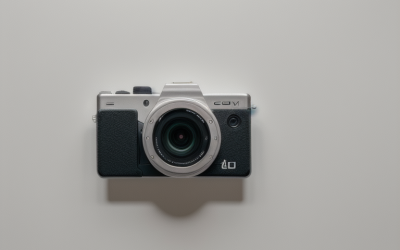
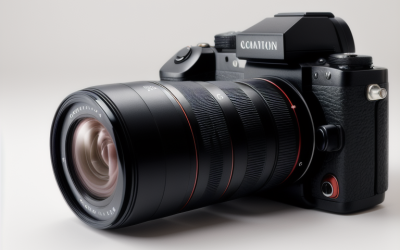
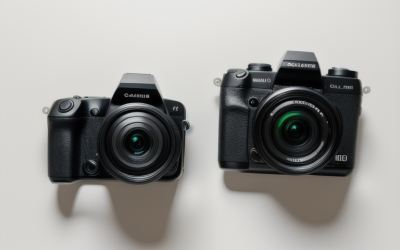
Choosing a first mirrorless camera is mostly a question of how much you want to grow into. Entry bodies keep the controls friendly and the lens kit affordable, while step-up bodies add autofocus intelligence, faster processors, and video tools that you may not use for a year. The danger for beginners is paying for features a smartphone already handles well, then lacking the lens and card needed to take the first good photo.
This guide is written for people buying their first interchangeable-lens camera in 2026 and comparing seven listings: three Canon EOS R100 offers, two Canon EOS R50 offers, and two Sony Alpha models. Every camera here is a true mirrorless design, so older DSLR bodies are not compared. Everything below is based on the sensor sizes, video modes, and bundled items printed in each title, so check the full description for lens and card details.
Our Top Picks
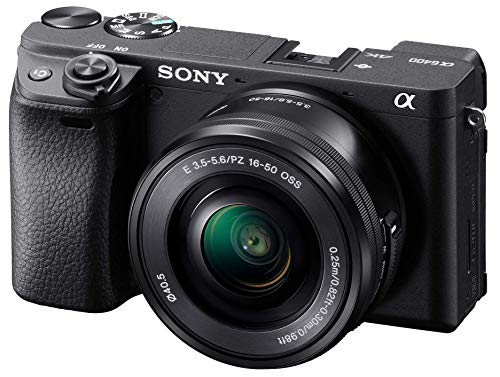 Sony Alpha a6400 Mirrorless Camera: Compact APS-C Interchangeable6.2 x 9.2 x 4.55 inches6.2 x 9.2 x 4.55 inches0.6 poundsCheck on Amazon
Top 3 picks at a glance
Quick Picks
As an Amazon Associate we earn from qualifying purchases at no extra cost to you.



| Product | Best for | Key spec from the title |
|---|---|---|
| Canon EOS R100 Lens Kit | Simple first mirrorless camera | 24.1MP APS-C, 4K video, Wi-Fi and Bluetooth |
| Canon EOS R100 Bundle with 64GB | Ready-to-shoot starter bundle | 24.1MP, Full HD video, Dual Pixel AF |
| Canon EOS R50 Lens Kit | Vlogging and content creation | 24.2MP APS-C, 4K video |
| Sony Alpha a6400 | Fast eye autofocus and flip screen | Real-time Eye AF, 4K video, 16-50mm lens |
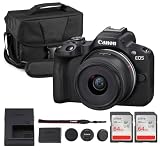
| Canon EOS R100 with Bag Bundle | Starter set with carrying bag | 64GB SD card, 200ES shoulder bag |
| Canon EOS R50 Accessory Kit | Vlogger starter kit | Vari-angle touchscreen, shoulder bag, 2 x 64GB |
| Sony Alpha a6700 Body | Step-up body for growth | 26MP APS-C, 4K video, log shooting |
How to Choose
Understand the sensor and lens
All seven listings use APS-C sensors, which is the standard size for beginner mirrorless cameras. They give shallower depth of field than a phone and better low-light behavior. The 18-45mm or 16-50mm kit lens covers wide to short telephoto, which is enough for family photos and travel. Plan to add a prime lens later if you want blurry backgrounds. A kit zoom is slower than a prime, so indoor shots at night will lean on higher ISO values, and that is an acceptable compromise for a first outfit.
Decide how much video matters
Most of these cameras list 4K video, but one R100 bundle lists Full HD, so confirm before assuming. For vlogging, look for a vari-angle or flip screen so you can see yourself, as on the R50 and a6400. Features like log shooting and LUT handling, listed on the a6700, matter only if you plan to color grade footage.
Look at autofocus and connectivity
Dual Pixel autofocus and real-time eye detection help beginners keep faces sharp without manual skill. Wi-Fi and Bluetooth, mentioned on an R100 listing, make it easier to send photos to your phone. Skimping on autofocus is one of the places where budget bodies cut corners, so check the named autofocus system.
Check what is in the box
Several listings are bundles that add a 64GB card, a shoulder bag, or extra memory cards. Those extras are handy but rarely worth overpaying for, since a card and bag are inexpensive. A body-only listing, like the a6700, needs a lens purchased separately. Ignore bundle filler that you would not otherwise buy. Also remember that a mirrorless camera uses a battery quickly compared with a phone, so a spare battery is a more useful extra than a decorative accessory.
The 7 Best Options
Canon EOS R100 Lens Kit
This R100 kit pairs the body with an RF-S 18-45mm F4.5-6.3 IS STM lens, a 24.1MP APS-C sensor, 4K video, and Wi-Fi and Bluetooth. It is positioned as a beginner photography camera. It suits someone upgrading from a phone who wants a simple, light camera for family photos and travel and does not want to learn a dozen menus. Because the kit lens stabilizes handheld shots, it is forgiving for people who have never held an interchangeable-lens camera, and the body is a gentle starting point before deciding whether to invest in a larger system.
- Image-stabilized kit lens helps with handheld shots.
- Wi-Fi and Bluetooth simplify sharing images.
- Trade-off: as the entry model, it offers fewer advanced controls than the R50.
Skip it if you plan to vlog and want a flip-out screen.
Canon EOS R100 Bundle with 64GB Card
This R100 bundle includes an RF-S 18-45mm lens, a 64GB card, and lists a 24.1MP APS-C sensor, Dual Pixel autofocus, and Full HD video, with a beginner focus. Be aware that this title mentions Full HD rather than 4K, so read the description carefully. It fits buyers who want the card included so they can shoot right away. For a first-time owner, avoiding the small hassle of buying a compatible card is a real convenience, and the focus on beginners in the title signals that the controls are meant to be approachable.
- Memory card is included, so you can start immediately.
- Dual Pixel autofocus supports easy focusing.
- Trade-off: the title lists Full HD video, which is a step below the other R100 listing.
Skip it if 4K video is important to you.
Canon EOS R50 Lens Kit
The R50 kit includes an RF-S 18-45mm F4.5-6.3 IS STM lens, a 24.2MP APS-C sensor, and 4K video, and the title highlights vlogging and content creation. It is the step up for creators who want a camera that can serve both stills and online video without moving to a complex rig. Compared with the R100 listings, it is the better match for anyone who expects to talk to the camera, upload clips regularly, and appreciate extra autofocus help when the subject is themselves.
- Positioned for vlogging and content creation.
- 4K video gives room for cropping and editing.
- Trade-off: it costs more than the R100 for features you may not use if you only take photos.
Skip it if you want the lowest-cost route into mirrorless.
Sony Alpha a6400
The a6400 is a compact APS-C interchangeable lens camera with real-time eye autofocus, 4K video, a flip screen, and a 16-50mm lens. It is a good fit for people who photograph kids, pets, or events and want the camera to track faces. Sony’s system also offers many lenses, which leaves room to grow. The compact body travels easily, and the combination of a flip screen and 4K video makes it a flexible all-rounder for someone who splits time between stills and short films.
- Real-time eye autofocus helps keep portraits sharp.
- Flip screen supports vlogging and selfies.
- Trade-off: the menu system can feel dense for a true beginner.
Skip it if you prefer a very simple interface or a camera that mainly relies on automatic modes, since the Sony menus reward people willing to explore settings.
Canon EOS R100 with Bag Bundle
This R100 offer pairs an 18-45mm lens with a 64GB SD card and a Canon 200ES shoulder bag. The title is light on specs, so check the description for sensor and video details. It suits a gift buyer or a first-timer who wants a bundled starter set rather than assembling accessories one by one. The shoulder bag adds convenience for carrying the body and lens together on a day trip, though a buyer who already owns a bag may prefer a cleaner listing without the extras.
- Includes a card and shoulder bag.
- Same entry-level R100 body as the other kits.
- Trade-off: the title gives few technical specs, so verify details before ordering.
Skip it if you already own a bag and cards.
Canon EOS R50 Accessory Kit
This R50 kit lists an APS-C camera with an 18-45mm lens, 4K video, Dual Pixel AF II, a vari-angle touchscreen, a shoulder bag, and two 64GB cards. The vari-angle touchscreen is a clear advantage for self-recording and low-angle shots. It fits a new vlogger who wants storage and a bag in the same purchase. With two cards in the bundle, one can stay in the camera while the other holds a backup or a separate project, which suits creators who shoot a lot of footage in a single outing.
- Vari-angle touchscreen helps with creative angles.
- Two cards offer extra storage.
- Trade-off: accessory bundles can add cost without improving image quality.
Skip it if you prefer to pick your own accessories.
Sony Alpha a6700 Body
The a6700 is an APS-C body with a 26MP sensor, 4K video, log shooting, LUT handling, and vlog-friendly functions. It is body only, so you must add a lens. It suits a motivated beginner who expects to grow into video grading and does not mind paying for headroom. It makes the most sense for a determined learner who already knows they will outgrow an entry body, because the extra capability is wasted if the camera stays on automatic mode for years.
- 26MP sensor with video tools for growth.
- Log and LUT features suit color grading.
- Trade-off: it is body only, and its advanced tools can overwhelm a first-time user.
Skip it if you want a complete kit that is ready to shoot out of the box.
Which One Fits Your Situation
You want a simple camera for family photos
The Canon EOS R100 Lens Kit is the straightforward answer, with a stabilized lens and easy sharing features. It keeps the learning curve gentle, and you can add lenses later if the hobby sticks.
You want to start a video channel
The Canon EOS R50 Accessory Kit makes sense because of its vari-angle touchscreen and included storage. Being able to see yourself while recording removes much of the guesswork from framing a shot.
You photograph moving kids and pets
The Sony Alpha a6400 is built around eye autofocus, which helps keep subjects sharp. That matters most when children and animals refuse to hold still for a posed portrait.
You expect to grow into serious video work
The Sony Alpha a6700 Body offers log shooting and LUT handling, provided you add a lens.
Common Mistakes
- Paying extra for a bundle bag and cards that cost little on their own.
- Assuming every R100 listing includes 4K video without reading the title.
- Buying a body only and forgetting that a lens is separate.
- Choosing a step-up body that is far more complex than you need.
- Ignoring the screen type when you plan to record yourself.
Related guides
- What Is The Best Budget Most Responsive Gaming Mouse Wired
- Low Latency Gaming Headphones Usb-C 2.4 Ghz Wireless
- Mechanical Gaming Keyboards Competitive Pc Gaming
Frequently Asked Questions
Is an APS-C sensor good enough for beginners?
Yes. APS-C is the common size for entry mirrorless cameras and offers a clear upgrade over a phone in low light and background blur.
Do I need 4K video?
Not necessarily. Full HD is fine for casual clips, but 4K gives more flexibility for cropping and editing. If you mostly share to social apps, the difference is often invisible on a phone screen.
Which lens should I buy first?
The kit lens is a good start. Later, consider a fast prime for portraits or low-light shooting once you know what you shoot most.
How is mirrorless different from a DSLR?
Mirrorless bodies skip the flip-up mirror and optical viewfinder, which usually makes them more compact and gives a live preview of exposure. DSLRs are a separate design and are not covered in this comparison.