
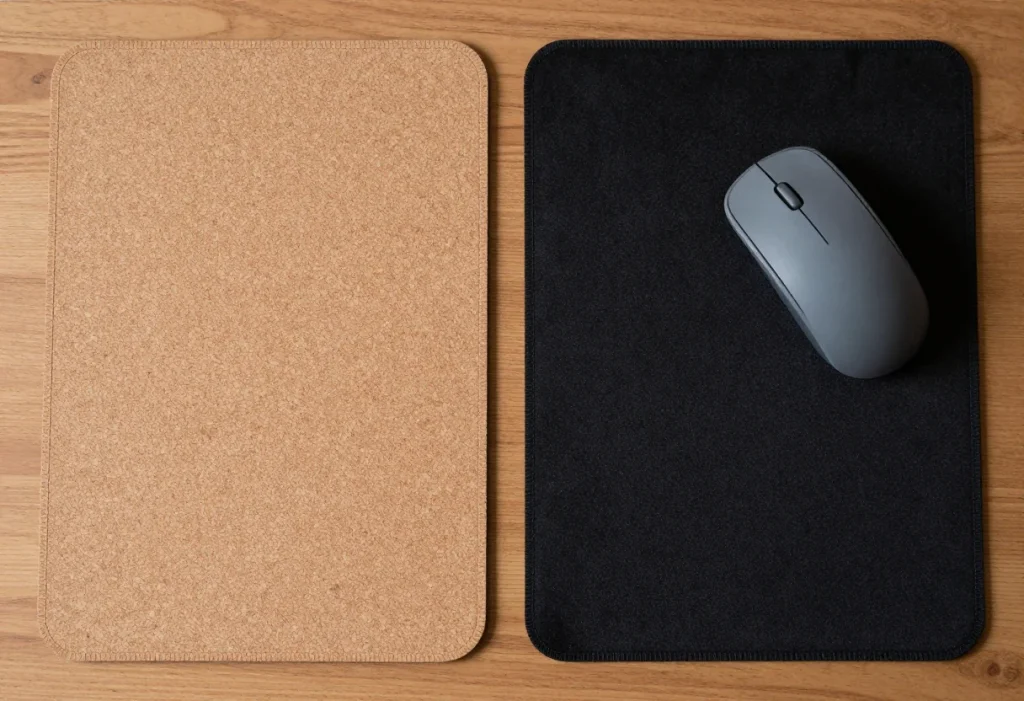
When curating a functional and beautiful workspace, the surface right beneath your hands sets the tone for your entire workday. Choosing between a cork desk mat vs micro weave desk mat is one of the most practical decisions you will make for your home office. While both options cushion your arms and protect your desk surface from laptop heat, ink stains, and scratches, they serve fundamentally different aesthetic and tactile preferences.
A cork desk mat brings organic warmth, structured firmness, and a touch of eco-friendly design to your workstation. On the other hand, a micro weave desk mat relies on high-density textile fibers to deliver buttery-smooth mouse tracking, soft wrist support, and intense durability. As remote work and flexible home setups evolve into 2026, finding the ideal balance between desktop ergonomics and interior design requires taking a closer look at how these two materials perform under daily pressure.
As an Amazon Associate we earn from qualifying purchases at no extra cost to you.



Top 3 picks at a glance
Quick Verdict
If you prioritize natural materials, minimalist aesthetics, and a firm surface ideal for handwriting and typing, choose a cork desk mat. It excels in design-forward spaces where modern organic decor takes center stage.
If you need maximum precision for gaming or graphic design, superior wrist cushioning during 10-hour workdays, and easy stain resistance, choose a micro weave desk mat. It is built for high-performance daily grinding and heavy mouse movement.
Side by Side
| Feature | Cork Desk Mat | Micro Weave Desk Mat |
|---|---|---|
| Comfort & Texture | Firm, smooth, warm to touch | Plush, soft, cushioned felt-like or smooth cloth |
| Mouse Precision | Good for general tasks; slightly higher friction | Exceptional; ultra-low friction for optical sensors |
| Durability | 3 to 5 years (edges can flake if unreinforced) | 3 to 6 years (anti-fray stitched edges extend life) |
| Price Range | $12 to $35 | $14 to $30 |
| Maintenance | Wipe clean with a damp cloth; naturally antimicrobial | Spot clean or hand wash with mild soap; dust magnet |
| Common Sizes | Standard medium/large (e.g., 31.5″ x 15.7″ / 80cm x 40cm) | Large to extended XXL/XXXL (up to 35.4″ x 15.7″+) |
| Aesthetic Style | Earthy, organic, Scandinavian, warm minimalist | Sleek, tech-focused, gaming setup, uniform black/colored |
| Sustainability | High (renewable oak bark, recyclable core) | Moderate (polyester fabric top with rubber/foam backing) |
| Best For | Writers, home stylists, casual computer users | Gamers, video editors, long-hour computer workers |
Where Cork Desk Mat Wins
The primary appeal of a cork surface lies in its unique tactile feel and natural sustainability. Harvested from the outer bark of cork oak trees, raw cork provides a naturally shock-absorbing, thermal-insulating base that stays warm to the touch even in chilled rooms. Unlike standard synthetic mats, cork does not trap cold temperatures from cold glass or solid hardwood desks.
For individuals who spend significant time writing in paper journals or taking notes, the firm density of cork offers an advantage. Pen nibs will not puncture paper as they sometimes do on soft cloth mats. Furthermore, cork contains suberin, a naturally occurring waxy substance that makes the material resistant to liquid absorption and inherently antimicrobial. Spilled coffee or water beads up on the surface, allowing you to wipe it away with a damp microfiber cloth before it sinks in.
Design versatility is another area where cork shines. Many modern offerings come as dual-sided accessories—featuring natural cork on one side and a smooth, color-accented PU leather on the reverse. For example, a Cork Desk Mat – Dual-Sided Desk Pad for Office and Home in Dark Green measuring 80cm x 40cm (around $16.99) allows you to swap between organic brown textures and a deep tone depending on your mood. Additionally, crafters and custom setup builders often utilize raw cork materials, such as 3 mm thick Hygloss Cork Sheets (12 x 18-inch 2-pack around $9.52), as custom underlays or sound-dampening desk liners beneath keyboard trays.
Where Micro Weave Desk Mat Wins
When performance, mouse sensor accuracy, and physical comfort take priority, micro weave cloth mats outshine almost every alternative on the market. Micro weave surfaces utilize micro-knitted synthetic fibers woven at high thread counts to create a uniform, low-friction landscape. This ultra-smooth top layer allows optical mouse sensors to track microscopic movements flawlessly without skipping or jittering.
Comfort during long editing sessions or gaming marathons is another area where micro weave excels. Most micro weave mats feature a 3 mm to 4 mm heavy-duty natural rubber base that yields slightly under pressure. This cushioning relieves contact pressure on your wrists and elbows, reducing fatigue over 8 to 12 hours of sitting at your workspace.
Coverage options are significantly broader for micro weave products. If you prefer to anchor your mechanical keyboard, mouse, audio interface, and coffee mug on a single seamless pad, micro weave mats come in expansive dimensions. Popular oversized options include the KTRIO Large Gaming Mouse Pad Desk Mat in XXL (31.5″ x 15.7″, around $15.99) or the extended XXXL variant (35.4″ x 15.7″, around $17.99). These wide formats cover nearly three feet of desktop space, unifying your workstation into a cohesive visual zone while suppressing keyboard typing vibrations.
Cost Over 5 Years
When evaluating the long-term investment in the cork desk mat vs micro weave desk mat debate, both options are affordable home office upgrades, but their wear patterns dictate replacement schedules.
A quality cork mat generally costs between $15 and $30 upfront. Over a 5-year timeline, unreinforced raw cork mats may experience slight flaking along the edges where your forearms rub daily. If you select a dual-sided or stitched-edge cork pad, expect it to last roughly 3 years before showing visible patina or wear, resulting in a 5-year total expenditure of around $30 to $60 (accounting for one replacement).
A micro weave desk mat costs between $15 and $25. Micro weave mats with reinforced stitched edges rarely fray or delaminate. However, high-friction areas can absorb palm oils and dust over time, requiring periodic washing. With proper cleaning every few months, a single micro weave mat easily lasts 3 to 5 years, keeping your total 5-year investment around $15 to $40.
Which One for Your Home
Small Apartment or Compact Workspaces
In tight spaces where a desk double-dips as a dining table or vanity, flexibility is vital. A compact micro weave mat rolls up tightly into a small footprint, letting you pack your office away into a drawer at the end of the day. However, if your desk remains on display in an open living room, a thin cork mat blends seamlessly into residential decor without making your apartment look like a corporate cubicle.
Family with Kids and Pets
If your home office double-functions as a homework space or host site for curious cats, micro weave is the most resilient pick. Pet hair wipes off high-density cloth easily with a lint roller, and durable stitched borders resist claw snagging. While cork resists water, heavy pen gouges from children can pit raw cork surfaces permanently.
Rental Space
Renters often struggle with cold, utilitarian laminate or metal furniture provided by landlords. A warm, dual-sided cork mat instantly adds textural warmth and masks cosmetic blemishes on worn rental desks. Its natural grip prevents sliding without requiring sticky rubber pads that could mar delicate surface coatings.
Long-Term Home Setup
For dedicated home offices with custom hardwood or standing desks, match the mat material to your main daily activity. If your work involves writing, creative direction, and video calls, cork provides a sophisticated, quiet backdrop. If you mix intense spreadsheeting, precision design work, or evening PC gaming, a large micro weave pad delivers the sensor performance and wrist support necessary for daily productivity.
FAQ
Can you use an optical mouse directly on a cork desk mat?
Yes, modern optical and laser mice track reliably on cork surfaces. The natural speckle and color variation give sensors plenty of visual tracking points. However, the glide feel is slightly firmer and offers more friction compared to a slick micro weave cloth mat.
Is a micro weave desk mat hard to clean if coffee spills on it?
Most micro weave desk mats feature liquid-repellent coatings that prevent sudden spills from soaking in immediately. For quick dry-offs, a paper towel absorbs drops right away. For dried stains, micro weave pads can be hand-washed with lukewarm water and mild dish soap, then air-dried flat overnight.
Do cork desk mats slip on smooth glass or polished wood desks?
Raw cork has an inherent rubberized friction coefficient that keeps it firmly in place on smooth laminate, glass, or finished oak. Dual-sided cork pads with PU leather backings usually feature textured undersides to prevent slipping during active typing and mouse movement.
How do I stop my new desk mat from curling at the edges after unboxing?
Both cork and micro weave mats are rolled for shipping. To flatten them quickly, unroll the pad on your desk, place heavy hardback books along the edges, and leave them overnight. Gentle warmth from a laptop battery or a brief pass with a hairdryer on low heat also relaxes compressed fibers or cork backing quickly.


