
Standing desks solve one problem and create another. The moment you hit the up button, every power cable, monitor lead, and charger gets pulled taut, dangles mid-air, and turns a clean home office into a tangled mess. Unlike a fixed desk where you can zip-tie everything and forget it, a sit-stand setup needs management that moves with you without snagging, pinching, or yanking plugs from the wall.
After living with wobbly trays, adhesive channels that slid off in summer heat, and spines that were too short to reach the floor, we focused on kits that actually handle vertical travel. In early 2026 we narrowed the field to seven standout systems for different budgets and mounting preferences, from flexible vertebrae that guide cables to the floor to full trays and raceways that keep power strips out of sight.
As an Amazon Associate we earn from qualifying purchases at no extra cost to you.


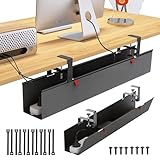
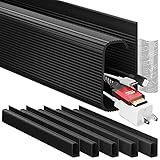

Top 3 picks at a glance
Quick Picks
| Product | Best for | Price |
|---|---|---|
| Ultimate Setup Under Desk Cable Management Vertebrae 133 cm | Best Overall for Standing Desks | $49.9 |
| Under Desk Cable Management Spine 53 Inch 101-Piece Kit | Best Complete Kit with Spine | $34.99 |
| Mzmaxy Cable Management 25” Cable Tray | Best Compact Tray for Small Desks | $21.59 |
| Univivi No Drill Under Desk Cable Management Tray 36 inch | Best No-Drill Extra Long Tray | $39.99 |
| Cotohim Under Desk Cable Management Tray 35.8″x5.6″ | Best Fabric Tray with Clamp or Screw Mount | $32.79 |
| EVEO Cable Management Under Desk Kit 96” J Channel 6X16 | Best Budget Raceway Pack | $16.97 |
| Under Desk Cable Management Tray No Drill Metal Mesh with Clamp Mount 2 Hole | Best Ultra-Budget Metal Tray | $13.99 |
How We Picked
We prioritized movement first. A kit has to protect cables through the full lift range of a typical standing desk, roughly 24 to 50 inches, without tension or floor drag. That meant testing how vertebrae spines flex, how trays handle a loaded power strip, and how raceways stay put when the desk cycles up and down dozens of times a day.
We also weighed installation reality, capacity, and value. We favored systems that offer secure mounting without damaging the desktop where possible, hold at least one full-size surge protector plus bricks and excess slack, and keep visible cables to a minimum. Prices were compared as listed at time of writing, from $13.99 to $49.9, so every pick had to justify its cost against build quality and what is included in the box.
The 7 Best Picks
1. Ultimate Setup Under Desk Cable Management Vertebrae – 133 cm – $49.9
This adjustable-length flexible cable spine is purpose-built for sit-stand desks and it shows. At 133 cm long, it provides continuous coverage from the underside of the desktop all the way to the floor even at full standing height, which prevents the exposed loop that shorter spines leave hanging. It is the cleanest way to hide the vertical run for monitors, power, and Ethernet without zip ties. Best for anyone whose main frustration is cables snagging or stretching when the desk moves.
- Pro: Extra-long 133 cm vertebrae covers the full lift range for taller users and high standing positions
- Pro: Adjustable, segmented spine flexes smoothly with the desk and keeps multiple cables neatly enclosed
- Con: Premium price at $49.9 and does not include a tray for storing a power strip
When to skip: If you need hidden storage for bricks and strips or want to avoid any floor-anchored install, choose a tray or raceway system instead.
2. Under Desk Cable Management Spine 101-Piece Kit – 53 Inch – $34.99
If you want a spine plus everything else, this 101-piece kit delivers. The 53 inch vertebrae snake handles the vertical drop while magnetic and screw-in mount options give you flexibility on wood, metal, or laminate tops. With dozens of clips, ties, and holders included, you can route peripheral cables across the underside and then feed the main bundle down the spine. It is ideal for first-time organizers who do not want to buy accessories separately.
- Pro: Complete 101-piece kit covers spine, routing, and mounting hardware in one purchase
- Pro: Choice of magnetic or screw-in mount adapts to different desk materials without guesswork
- Con: 53 inch spine can be short for very tall standing heights compared to 133 cm options
When to skip: If your desk sits at 47 inches or higher regularly, you may need a longer spine to avoid a gap at the floor.
3. Mzmaxy Cable Management 25” Cable Tray – $21.59
Not every desk needs a 36-inch trough. This 25 inch tray is sized for compact and mid-size standing desks, apartment setups, and single-monitor workstations where a full-length tray would overwhelm the frame. It creates a shallow basket under the desktop to lift a power strip and coil excess length, getting bricks off the floor so they travel with the desk. Best for smaller footprints where you still want a sturdy metal-style solution without paying for extra length you cannot use.
- Pro: 25 inch length fits small and narrow desks and leaves room for legs and crossbars
- Pro: Affordable mid-range price at $21.59 for solid under-desk storage
- Con: Shorter length limits capacity if you run dual monitors, chargers, and a large surge protector
When to skip: If you have a 60-inch or wider desk with multiple bricks, step up to a 35 to 36 inch tray for more room.
4. Univivi No Drill Under Desk Cable Management Tray 36 inch – $39.99
This 36 inch tray is the renter-friendly answer to heavy power strips. The no-drill design clamps or adheres to the desktop underside, so you avoid drilling into laminate or veneer while still getting full-width coverage for large desks. At three feet long, it easily holds a 12-outlet strip, adapters, and coiled slack side by side without crowding. The open design also makes it easy to add or remove a cable without unloading everything.
- Pro: Generous 36 inch length handles wide desks and multiple power bricks in one tray
- Pro: No-drill installation protects the desktop finish and works well for rentals
- Con: At $39.99 it costs more than compact trays and needs adequate under-desk clearance
When to skip: If your desk has a thick apron, shallow frame, or obstructions underneath, measure clearance before ordering this long tray.
5. Cotohim Under Desk Cable Management Tray 35.8″x5.6″ – $32.79
For a softer, quieter option, this fabric cord hider measures 35.8 inches by 5.6 inches and hangs under the desk with either clamp or screw mounting. The fabric raceway style conceals strips and cables while allowing airflow and easy access, and it will not rattle like metal when you bump the desk. The wide, low-profile basket is great for standing desks because it flexes slightly instead of fighting the frame during height changes.
- Pro: Extra-wide 35.8″x5.6″ fabric tray hides long strips while staying low-profile
- Pro: Dual clamp or screw mount options let you choose damage-free or permanent install
- Con: Fabric construction offers less rigid protection than metal mesh if cables are heavy
When to skip: If you need a hard-sided cage to support very heavy UPS units or multiple large adapters, pick a metal tray.
6. EVEO Cable Management Under Desk Kit 96” J Channel 6X16 – $16.97
When the goal is invisible runs rather than basket storage, this kit is hard to beat. You get six self-adhesive J channels totaling 96 inches, configured as 6 units of 16 inches each, to run along the desk underside, down a leg, or along a wall. They snap open for easy cable adds and paint a clean line for monitor and accessory leads that otherwise dangle. At $16.97 it is the most affordable way to get a polished look across a full desk perimeter.
- Pro: Six 16-inch channels total 96 inches for extensive coverage at a budget price of $16.97
- Pro: Self-adhesive J channel design hides cables while keeping them accessible
- Con: Adhesive mount can weaken with heat, dust, or textured surfaces and does not store a power strip
When to skip: If you need to lift a heavy surge protector off the floor, pair this with a tray or choose a tray-based kit.
7. Under Desk Cable Management Tray No Drill Metal Mesh with Clamp Mount 2 Hole – $13.99
This is the entry-level fix that still gets the essentials right. The metal mesh construction provides ventilation and strength, the clamp mount delivers no-drill installation, and the 2-hole pattern secures the tray without shifting when the desk moves. While compact and spare compared to larger trays, it lifts a standard power strip and tidies slack for a single workstation without fuss or a big spend. Best for budget-conscious buyers who want metal durability for the lowest price.
- Pro: Lowest price at $13.99 with durable metal mesh and clamp mount convenience
- Pro: 2-hole mounting adds stability while remaining no-drill on the desktop surface
- Con: Smaller capacity than 25 to 36 inch trays, so large strips may overhang
When to skip: If you have multiple bricks, a long strip, and lots of slack, invest in a longer 35 to 36 inch tray for cleaner storage.
Buying Guide
Spine vs Tray vs Raceway: Which System Moves Best
Standing desks need different management for vertical and horizontal runs. A vertebrae spine is best for the vertical drop from desk to floor, because its linked segments bend as the desk rises and falls without pinching. A tray is best for horizontal storage, holding the surge protector, adapters, and coiled excess so they travel with the desk. J channels and raceways are best for hiding the last few visible feet along the underside or leg. Many clean setups use a tray plus a spine, or a tray plus raceways, to cover both planes.
Mounting and Desk Compatibility
Check your desk before you buy. No-drill clamps and adhesive mounts preserve laminate and rental furniture but need a flat, clean underside and enough lip to grip. Screw-in mounts are strongest on solid wood or metal frames but leave holes. Magnetic mounts only work if your frame is steel. For trays, confirm under-desk clearance around crossbars and legs, especially on 2-leg standing frames, and measure length: a 36 inch or 35.8 inch tray suits 55 to 72 inch tops, while a 25 inch tray fits 40 to 48 inch tops more neatly.
Capacity and Cable Planning
Count what must move with the desk. A typical setup with two monitors, a laptop charger, and accessories needs room for one 6 to 12 outlet strip plus two to three bricks and about 2 to 3 feet of slack per cable. Wide trays at 35 to 36 inches accommodate that with space to spare, while shorter 25 inch options handle one strip and a couple of bricks. For spines, confirm total length against your max standing height plus floor gap; 53 inches works for many users, while 133 cm provides extra margin for taller positions. Add cable clips along the underside so individual leads feed neatly into the main storage or spine.
Our Verdict
For standing desks, vertical protection matters most, which is why the Ultimate Setup Vertebrae at 133 cm earns our top spot. Its extra length and flexible segments keep the entire drop covered through the full lift range, eliminating snags that shorter solutions miss. If you prefer an all-in-one purchase, the 53 Inch 101-Piece Spine Kit at $34.99 is the best value with magnetic and screw-in mounting plus routing hardware. On a tighter budget, the $13.99 Metal Mesh No Drill Tray and the $16.97 EVEO 96 inch J Channel kit both deliver a noticeably cleaner desk for less than $22.
FAQ
Do I need a cable spine for a standing desk?
If more than two cables run to the floor, yes. Without a spine, power and video leads hang loose and get pulled taut at standing height. A vertebrae spine encloses the bundle and flexes with the desk, preventing tension, abrasion, and accidental unplugging during height changes.
Will a no-drill tray hold a heavy power strip?
A quality clamp-mounted tray will hold a typical 6 to 12 outlet strip plus bricks when installed on a flat, clean underside with the clamp fully tightened. For very heavy loads or textured surfaces, a screw-mounted metal or fabric tray rated for wider dimensions like 35.8″x5.6″ provides extra security.
What length tray or spine should I buy?
Match length to your desk and lift height. For desks 55 inches and wider, a 36 inch or 35.8 inch tray offers the most usable storage. For spines, measure from the underside at your highest standing position to the floor and choose a spine that meets or exceeds that distance; 133 cm covers most sit-stand ranges with margin, while 53 inches suits average-height conversions.
Can I combine a tray and raceways?
Absolutely, and it is often the cleanest approach. Use a tray to hold the strip and slack under the center, then use J channels or raceways along the back edge and legs to guide monitor and charger leads into the tray. A 96 inch kit with six 16 inch channels is enough to hide runs on most desks without extra purchases.


