
We have all seen the curated workspace setups on social media: a minimalist wooden desk, a sleek mechanical keyboard, and a beautifully textured wool felt desk mat anchoring the entire aesthetic. It looks incredibly cozy, clean, and productive. However, many buyers purchase a desk mat based solely on color or overall size, only to realize too late that they bought the wrong thickness.
Choosing the wrong thickness for a wool felt desk mat is one of the most common mistakes workspace enthusiasts make. Buy a mat that is too thin (under 2mm), and it will constantly bunch up, slide around, and curl at the corners like a cheap piece of paper. Buy a mat that is too thick (5mm or more), and your optical mouse sensor may struggle to register movements, your wrists will rest at an unnatural angle, and writing on a single sheet of paper will feel like trying to write on a mattress.
As an Amazon Associate we earn from qualifying purchases at no extra cost to you.
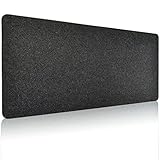


To build a workspace that is both highly functional and comfortable, you need to understand how thickness interacts with your daily tasks, your gear, and your physical comfort.
Top 3 picks at a glance
Decide These 3 Things First
Before diving into materials and specific brands, you must define the core parameters of your daily workflow. Ask yourself these three questions to narrow down your choices immediately:
- What is your primary input device? If you use a high-performance optical mouse for gaming or precision graphic design, a thinner, denser mat (3mm) is critical. If you primarily type on a mechanical keyboard and use a trackpad, a thicker mat (4mm to 5mm) will provide superior acoustic dampening and comfort.
- Do you write by hand? Felt is inherently soft. If you frequently sign documents or write in a journal on a single sheet of paper, a thick felt mat will cause your pen to poke through the page. You will either need a thinner 2mm to 3mm mat or a dedicated hard writing surface.
- What is your desk surface made of? Hard, cold surfaces like glass or metal benefit immensely from the thermal insulation of a thicker 4mm or 5mm mat. Solid wood desks are softer and warmer, meaning a standard 3mm mat is usually more than enough to protect the wood grain from keyboard scratches.
Thickness and Comfort (The Core Factor)
The thickness of a wool felt desk mat is the single most important factor governing how it feels under your forearms and how your mouse glides across it. Felt desk mats generally fall into three thickness categories, each serving a distinct purpose:
- 2mm (Ultra-Thin & Minimalist): Often found in budget-friendly synthetic options ranging from $15 to $20. While incredibly lightweight, 2mm mats offer very little cushioning. They are highly prone to edge curling because the thin fibers do not have enough structural weight to lie perfectly flat.
- 3mm (The Standard “Sweet Spot”): This is the industry standard for premium mats, balancing comfort with utility. At 3mm, the mat is thick enough to cushion your wrists and insulate your hands from a cold desk, yet thin enough that your optical mouse can glide smoothly without sinking into the fibers. It provides excellent stability and lies flat easily.
- 4mm to 5mm (Heavy-Duty & Acoustic-Focused): These are luxury-class mats designed primarily for keyboard enthusiasts. A 5mm mat absorbs the deep, clacky vibrations of mechanical keyboards, reducing typing noise by up to 8 decibels. However, a mouse can “sink” slightly into 5mm felt, increasing friction and making precise tracking more difficult.
Material Composition: Pure Wool vs. Synthetic Blends
Do not let the word “felt” fool you; not all felt is made of wool. The material composition directly dictates how a specific thickness behaves over time.
Pure 100% Merino wool felt is the gold standard. It is naturally fire-resistant, water-repellent (thanks to natural lanolin oils), and incredibly soft to the touch. A 3mm pure wool mat feels dense, premium, and resists pilling (the formation of small fiber balls). However, pure wool mats are expensive, typically costing between $50 and $100 depending on the size.
Synthetic felt, usually made from recycled plastic (polyethylene terephthalate, or PET) or acrylic, is highly common in the $20 to $35 price range, such as products from brands like DAWNTREES and Nordik. Synthetic felt is much rougher to the touch and can feel scratchy against bare forearms. Furthermore, synthetic fibers lack the natural resilience of wool; a 3mm synthetic mat will feel stiffer and less pliable than a 3mm pure wool mat, and it is much more prone to pilling under heavy mouse movement.
Desk Mat Dimensions and Keyboard Sizing
A desk mat must fit both your desk and your peripheral layout. If a mat is too small, your keyboard and mouse will feel cramped; if it is too large, it will spill over your desk edges or overlap with monitor stands.
Common sizing conventions include:
- Medium (approx. 24″ x 12″): Best for compact 60% or 75% keyboards paired with a mouse.
- Large (approx. 35″ x 17″ to 40″ x 16″): The most versatile size. It comfortably accommodates a full-sized 104-key keyboard, a mouse, and perhaps a smartphone or notepad. The Nordik Felt Desk Mat (35″ x 17″) fits beautifully in this category.
- Extra Large (approx. 47″ x 24″): Designed to cover almost the entire depth of a standard 30-inch deep desk. The DAWNTREES 47.2″ x 23.6″ mat is an excellent example of this category, providing a massive, unified tactile surface for your entire workstation.
Pay attention to the weight of the mat in relation to its size. A high-quality 47″ x 24″ mat at 3mm thickness should weigh between 14 and 18 ounces. If it weighs significantly less, it is likely made of low-density synthetic felt that will slide around easily.
Backing Construction and Slip Resistance
Because wool and synthetic felt are naturally slippery on polished wood, laminate, or glass, the backing of your desk mat is just as important as its thickness. Without a proper backing, a felt mat will slide every time you move your mouse or rest your elbows.
Look for these three primary backing styles:
- No Backing (Double-Sided Felt): Some premium brands offer reversible mats with no backing. While they look elegant, they require a heavy keyboard (at least 3 to 4 pounds) to anchor them in place. They are not recommended for glass desks.
- Silicone/Rubber Micro-Dots: Budget and mid-tier mats, such as those from DAWNTREES, often feature a array of tiny rubberized dots on the underside. This adds about 0.5mm to the total thickness and offers excellent grip on almost all surfaces without leaving sticky residues.
- Cork Laminate: Premium mats often laminate a 1mm to 2mm layer of natural cork to the bottom of the felt. This creates a sturdy, structured, non-slip composite mat that stays perfectly flat and protects delicate wood finishes flawlessly.
Price Tiers and Long-Term Value
Your budget will largely dictate the thickness and material purity of the mat you can afford. Here is what you can expect at different price points:
- Budget ($15 to $25): Usually 2mm to 3mm synthetic felt (PET/polyester). These mats, like the DAWNTREES 40″ x 16″ ($19.99) or the Nordik 35″ x 17″ ($24.97), offer great entry-level aesthetics but will scratch your skin slightly more than wool and will require replacement sooner due to fiber wear.
- Mid-Range ($25 to $45): Thicker synthetic mats or wool-synthetic blends (usually 80% polyester, 20% wool) in larger sizes, such as the DAWNTREES 47.2″ x 23.6″ ($29.99 to $32.99). These offer excellent coverage and improved thickness consistency.
- Premium ($50 to $100+): 100% genuine Merino wool, usually sourced from Germany or Australia, at a true 3mm or 5mm thickness, paired with a natural cork or rubber backing. These mats feel incredibly soft, do not smell like chemicals, and can last for years with proper maintenance.
Warranty, Delivery, and Maintenance Expectations
When buying online, felt mats are almost always shipped rolled up in tight cardboard tubes or boxes. When you first unbox a 3mm or 5mm mat, it will not lay flat. Do not panic. Budget synthetic mats may take up to a week to lose their curl, while premium wool mats usually settle within 24 to 48 hours. You can speed up this process by placing heavy books on the corners or ironing the mat on a very low “wool” setting with a damp towel placed between the iron and the felt.
Warranties on budget mats are typically limited to basic 30-day return windows. Premium manufacturers often offer 1-to-2-year warranties against severe pilling or edge fraying.
For maintenance, remember that wool is self-cleaning to a degree but hates being saturated with water. Vacuum your mat once a week using a brush attachment to remove dust and skin cells. If you spill coffee or tea, blot—do not scrub—immediately with a dry microfiber cloth. Scrubbing will tear the fibers and cause permanent pilling.
Spec Checklist
Use this quick-reference matrix to align your budget with the expected specifications of your desk mat:
| Specification | Budget Tier | Mid-Range Tier | Premium Tier |
|---|---|---|---|
| Thickness | 2mm to 3mm | 3mm to 4mm | 3mm to 5mm |
| Material | 100% Synthetic (Polyester/PET) | Wool-Synthetic Blend | 100% Merino Wool |
| Backing Type | None or light silicone dots | Dense rubberized micro-dots | Natural cork or natural rubber |
| Pilling Resistance | Low (requires shaving) | Moderate | High |
| Acoustic Dampening | Minimal (1-3 dB reduction) | Moderate (3-5 dB reduction) | Excellent (5-10 dB reduction) |
| Average Price Range | $15 – $25 | $25 – $50 | $50 – $100+ |
Red Flags
Keep an eye out for these warning signs when shopping for a desk mat:
- “Felt” without the word “Wool”: If the product description repeatedly uses the word “felt” but never specifies “wool,” “Merino,” or “wool-blend,” you are buying 100% synthetic plastic felt. It will feel scratchy and pill quickly.
- No anti-slip backing mentioned: If a mat does not explicitly state it has rubber dots, a silicone layer, or a cork backing, it is simply a raw piece of cut felt. It will slide around your desk constantly.
- Strong chemical odors out of the box: Cheap synthetic mats are often processed with harsh chemical adhesives. If your mat arrives smelling strongly of petroleum or plastic, return it; those fumes can linger in small home offices for weeks.
- Laser-cut edges with hard melted plastic: Some cheap synthetic mats are laser-cut, which melts the plastic edges to prevent fraying. This leaves a sharp, scratchy border that will irritate your wrists as you type. Look for clean, soft-cut edges or stitched borders.
FAQ
Does an optical mouse work well on a 5mm felt desk mat?
Generally, optical mice struggle on 5mm felt mats. The extra thickness allows the mouse to sink slightly into the fibers, which increases friction and can interfere with the mouse sensor’s focal distance, leading to jittery tracking. If you are a gamer or designer, stick to a denser 3mm mat or use a small, dedicated hard mousepad on top of your felt mat.
How do I stop a wool felt desk mat from sliding?
If you purchased a mat without a non-slip backing, the easiest solution is to buy a thin roll of silicone drawer liner or rug gripper pad. Cut it slightly smaller than your desk mat and place it underneath. This holds the mat securely in place without adding noticeable bulk.
Can I write on paper directly over a felt desk mat?
No. Regardless of thickness, wool felt is too soft to act as a writing surface. Your pen will puncture the paper, and your handwriting will look messy. If you need to write, you must use a notebook with a hard backing, or slide a hard plastic or leather writing desk pad over the felt.
How do I clean a spilled drink from a wool felt mat?
Act quickly! Blot the spill immediately with a clean, dry towel to absorb as much liquid as possible. Do not rub, as rubbing pushes the liquid deeper into the fibers. If a stain remains, spot clean with a mixture of cool water and a few drops of mild wool-safe detergent. Press a damp cloth to rinse, and let the mat air-dry completely away from direct heat or sunlight.
As we look toward workspace trends in 2026, the shift toward natural, tactile materials like merino wool highlights our desire to bring warmth and comfort back into our digital workspaces. By paying close attention to thickness, material composition, and backing style, you can ensure your desk mat is not just an aesthetic accessory, but an ergonomic upgrade that lasts for years to come.


