
When designing a home workspace that doubles as a battle station, the modern gamer faces a aesthetic dilemma. The bright, garish RGB-lit synthetic mouse pads of yesteryear are being phased out in favor of natural, sophisticated textures. If you are trying to balance a curated home aesthetic with high-performance gaming, you have likely narrowed your choices down to two organic materials: cork and felt.
But choosing between these two materials is not just about looks; it directly impacts how your mouse communicates with your computer. A desk mat acts as the primary tracking surface for your mouse’s optical sensor. The debate of cork vs felt desk mat for gaming tracking comes down to a battle between physical friction, sensor accuracy, and everyday livability. While one offers a smooth, structured glide, the other provides unmatched warmth and acoustic dampening. Let us break down the technical and practical realities of both materials to help you decide which belongs in your home.
As an Amazon Associate we earn from qualifying purchases at no extra cost to you.


Top 3 picks at a glance
Quick Verdict
If your primary focus is competitive gaming, tracking accuracy, and easy maintenance, cork is the clear winner. Its flat, uniform micro-texture provides a stable surface for optical mouse sensors, preventing jitter and cursor skips. However, if you prioritize comfort, acoustic dampening, and a cozy aesthetic—and you primarily play casual or turn-based games—a high-quality felt mat is the superior lifestyle choice. Just be prepared to clean it more often and potentially use a small dedicated gaming mouse pad on top of it for high-precision sessions.
Side by Side
To help you visualize how these materials stack up across everyday home and gaming metrics, here is a direct comparison:
| Feature | Cork Desk Mat | Felt Desk Mat |
|---|---|---|
| Comfort & Warmth | Firm, neutral temperature, can feel slightly scratchy on wrists. | Soft, plush, highly insulating, comfortable for long sessions. |
| Gaming Tracking Accuracy | High. Flat, predictable surface with low sensor interference. | Moderate to Low. Fibers can cause sensor jitter or tracking skips. |
| Friction & Glide | Medium-high static friction; consistent, controlled glide. | High dynamic friction; heavy mouse drag unless using PTFE feet. |
| Price Range | $15 to $45 for premium molded cork. | $12 to $60 depending on synthetic vs. merino wool blend. |
| Maintenance & Cleaning | Easy. Wipe down with a damp cloth; naturally water-resistant. | Difficult. Absorbs liquids, collects dust, hair, and requires hand-washing. |
| Acoustic Dampening | Moderate. Dampens keyboard vibrations slightly. | Excellent. Absorbs high-frequency mechanical keyboard clacks. |
| Durability | Moderate. Can crack or crumble at the edges over time. | High (synthetic) to Moderate (wool which is prone to pilling). |
| Best For | FPS/RTS gamers, neat freaks, and warm climates. | Casual gamers, mechanical keyboard enthusiasts, and cold climates. |
Where Cork Wins
Cork is a remarkably resilient natural material harvested from the bark of the cork oak tree. For gaming, cork wins handily in the category of raw sensor tracking. Modern optical mouse sensors operate by taking thousands of microscopic digital pictures of the surface beneath them every second. They analyze the differences between these images to calculate movement. Cork offers a highly consistent, low-profile micro-texture that allows these sensors to track movement with incredible precision, minimizing cursor drift or sudden skips during fast-paced maneuvers.
Beyond tracking, cork is exceptionally hygienic. It contains suberin, a natural waxy substance that makes the material impermeable to liquids and resistant to mold, mildew, and bacteria. If you spill your morning coffee or an energy drink during a tense match, a simple wipe with a damp cloth solves the problem.
For DIY enthusiasts who love a cohesive workspace, cork is also incredibly versatile. You can pair a cork desk mat with other natural cork elements around your room, such as using a
Con-Tact Brand Cork Roll, Self-Adhesive, 12″ x 4′ ($7.08)
to line nearby floating shelves or desk drawers. You can even use a
25 Pack Natural Soft Wood Corks, Tapered Cork Wooden Beer Bottle Stopper ($5.99)
as creative cord organizers or headphone stands, tying your entire organic gaming setup together seamlessly.
Where Felt Desk Mat for Gaming Tracking Wins
Felt brings an undeniable warmth, texture, and sophistication to a desk that cork simply cannot match. If your desk is located in a living room or a shared bedroom, a felt mat softens the look of your tech setup, making it feel like a integrated piece of home decor rather than an invasive command center. Products like the
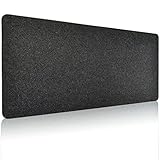
DAWNTREES Felt Desk Mat, Computer Mat for Desk, Dark Gray (36x12Inches) ($14.89)
offer a sleek, space-conscious footprint that cushions your wrists and keeps your keyboard from sliding.
Where felt truly shines is in its acoustic properties and tactile comfort. If you use a mechanical keyboard with clicky or tactile switches, a thick felt mat acts as a giant dampening pad, absorbing the harsh, high-frequency vibrations that reverberate through wooden desks. It transforms a harsh “clack” into a deep, satisfying “thock.” Additionally, during cold winter mornings, resting your forearms on a plush felt surface is infinitely more comfortable than resting them on cold wood, glass, or even neutral cork.
However, when we look specifically at the cork vs felt desk mat for gaming tracking dynamic, felt presents challenges. The loose, woven fibers of felt can confuse optical sensors, especially if you use a mouse with a low lift-off distance or an older sensor. To combat this, many gamers who prefer the cozy aesthetic of felt will opt for a larger size, such as the
DAWNTREES Large Felt Desk Mat, 40”x16” Full Keyboard and Mouse Pad ($19.99)
, and place a small, dedicated hard-surface gaming mouse pad on top of it specifically for competitive play. This gives you the best of both worlds: acoustic dampening and wrist comfort across your entire desk, with a high-performance tracking zone for your mouse.
Cost Over 5 Years
When budgeting for your home office, it is helpful to look at the total cost of ownership over a five-year lifecycle. Neither cork nor felt lasts forever under the daily friction of gaming and working.
- Cork Desk Mats ($15 – $45 initial purchase): Cork is prone to drying out and cracking over time, especially along the edges where your wrists rub against it. In a typical five-year window, you will likely need to replace a cork mat at least once, if not twice, due to physical degradation or edge crumbling.
Estimated 5-Year Cost: $30 to $90 - Felt Desk Mats ($12 – $60 initial purchase): Synthetic felt (like polyester) is incredibly durable and resists tearing, but it is highly susceptible to pilling (forming tiny balls of fiber) and deep staining from sweat, skin oils, and spills. Wool felt is more stain-resistant but expensive and still prone to pilling. You will likely replace a felt mat every 18 to 24 months to keep it looking clean and tracking acceptably.
Estimated 5-Year Cost: $36 to $120
Which One for Your Home
Every home environment has its own unique demands. Here is how to choose the right material based on your living situation.
Small Apartment or Studio
In a small apartment, your desk is often visible from your bed or sofa. Sound dampening is crucial if you share the space with a partner or roommate. A felt mat is the ideal choice here. It quietens your typing and mouse movements, and its soft, textile texture helps the desk blend into the residential feel of the room rather than standing out as a cold, sterile work station.
Family with Kids or Pets
If you have young children who colored-pencil your desk or pets that shed hair constantly, avoid felt at all costs. Felt acts like Velcro for cat and dog hair, and liquid spills will sink deep into the fibers, leaving permanent stains. A cork desk mat is the smarter choice for active family homes. It can be quickly wiped clean, vacuumed, or even lightly sanded down with fine-grit sandpaper to remove stubborn pen marks or stains.
Rental Property
When renting, preserving the condition of your landlord’s provided desk or protecting your own expensive, hard-to-move furniture is a priority. A thick felt desk mat provides excellent scratch protection for delicate wood veneers or glass-top desks. Because felt has more give and cushion than cork, it acts as a better protective barrier against dropped heavy objects, like microphones or gaming controllers.
Long-Term Home
If you are building out your forever home office and planning your design trends for 2026 and beyond, cork offers a timeless, architectural look that pairs beautifully with custom walnut, oak, or maple desks. Its structured, flat profile looks incredibly modern and clean, giving your workspace a deliberate, professional aesthetic that is highly functional for both high-level gaming and executive work.
FAQ
Does an optical gaming mouse work directly on felt?
Yes, but performance depends heavily on your mouse sensor. Modern high-end optical sensors (like those found in premium gaming mice) can track on felt, but you will experience higher dynamic friction (drag) and occasional micro-stutters. For casual gaming, it is fine; for competitive shooters, it is not recommended without a dedicated mouse pad on top.
How do you clean a cork desk mat compared to a felt desk mat?
Cork is incredibly easy to clean: simply wipe it with a damp cloth and a drop of mild dish soap, then let it air dry. Felt requires much more care. You must vacuum it regularly to remove dust and pet hair, spot-treat liquid spills immediately with a dry cloth, and occasionally hand-wash it in cold water to prevent shrinking or warping.
Does cork crumble over time under heavy mouse movement?
High-quality, high-density molded cork mats are designed to resist crumbling. However, cheap, thin cork sheets can flake over time under the constant friction of your wrist and mouse. To prevent this, look for cork mats with sealed edges or a backing material (like rubber or vegan leather) that adds structural integrity.
Which material is better for mechanical keyboard sound dampening?
Felt is vastly superior for sound dampening. The loose, porous structure of felt fibers is highly efficient at trapping and absorbing sound waves, significantly reducing the deep resonance of mechanical keyboards. Cork provides some vibration reduction, but because it is much denser and firmer, it does not absorb sound as effectively as felt.


