
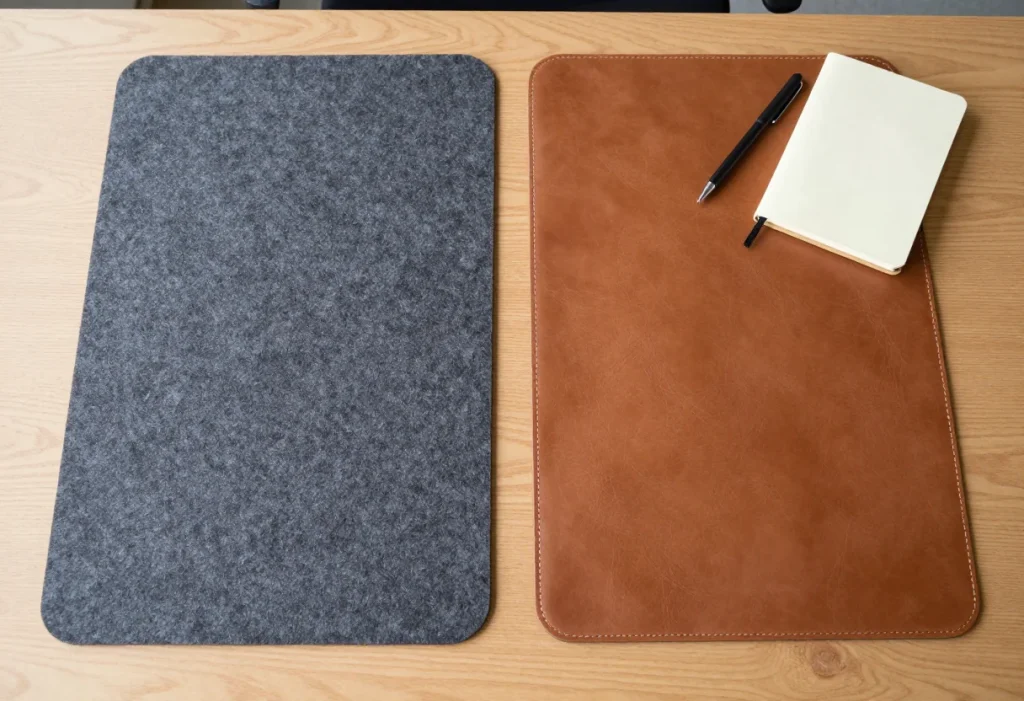
Setting up a home office is no longer a temporary scramble; it has become an art of curating your personal environment. One of the most tactile decisions you will make sits directly under your hands for eight hours a day. When deciding on a felt vs leather desk mat for office work, the choice isn’t just about protecting your wood or laminate tabletop. It is about how your mouse glides, how loud your mechanical keyboard sounds, how you clean up a spilled morning macchiato, and how warm your wrists feel on a chilly morning. It is a choice between the cozy, structured warmth of wool and the sleek, timeless prestige of leather.
For some, the soft, textured surface of wool felt provides a Scandinavian, minimalist sanctuary that softens the hard edges of modern tech. For others, the smooth, wipe-clean surface of leather offers a commanding executive presence and unparalleled utility. Let us break down how these materials perform in a real working home environment.
As an Amazon Associate we earn from qualifying purchases at no extra cost to you.



Top 3 picks at a glance
Quick Verdict
If you prioritize acoustic dampening, physical warmth, and a cozy aesthetic, felt is your best choice. However, if you eat at your desk, have pets, write on physical paper, or want a surface that will last a decade without showing wear, leather (or high-quality PU leather) is the clear winner. For the majority of home offices where coffee spills and multi-use desks are common, a leather desk mat offers far more practical durability.
Side by Side
To help you visualize how these materials stack up, here is a direct comparison of their key performance metrics for daily office work:
| Feature | Felt Desk Mat | Leather/PU Desk Mat |
|---|---|---|
| Comfort & Warmth | Excellent; soft, cushioned, and insulates against cold desks. | Good; smooth, but can feel cold in winter or sticky in summer. |
| Durability | Moderate; prone to pilling, fraying, and lint accumulation. | High to Excellent; highly resistant to tearing and surface wear. |
| Price Range | $15 to $90 (depending on synthetic vs. merino wool). | $12 to $200 (PU synthetic vs. premium full-grain leather). |
| Maintenance | High; requires vacuuming, lint rolling, and immediate spot-cleaning. | Very Low; wipes clean with a damp cloth. |
| Space Needed | Needs a flat surface; thicker profiles (3mm–5mm) can unevenly raise keyboards. | Thinner profile (1.5mm–3mm); sits completely flat. |
| Aesthetic Style | Cozy, modern, Scandinavian, casual. | Professional, executive, classic, sleek. |
| Resale & Longevity | Low; fibers wear down and stain over 1–2 years of heavy use. | High; real leather develops a desirable patina over many years. |
| Best For | Keyboard enthusiasts, quiet offices, and cold climates. | Busy family homes, writers, and those who drink/eat at their desks. |
Where Felt Wins
Felt brings a unique sensory experience to the workspace. True desk-grade felt is typically made from 100% merino wool or a dense synthetic polyester blend, measuring between 3mm and 5mm in thickness. This thickness acts as an excellent acoustic dampener. If you use a mechanical keyboard, a felt mat absorbs the deep vibrations and sharp “clacks,” transforming your typing experience into a much quieter, deeper sound register.
Felt also excels at temperature regulation. If you have a glass, metal, or solid stone desk, it can feel freezing to the touch in the mornings. Felt acts as an insulator, keeping your wrists and forearms warm. It also offers a distinct visual warmth that breaks up the sterile look of monitors, plastic keyboards, and cables.
It is important to note the difference between craft felt and desk mat felt. Craft felts, such as KaKaPops Thin Felt Fabric Sheets, Assorted Colors Stiff Felt Sheets for Crafts DIY Patchwork Sewing Projects Decoration (Stiff 50 Colors, 8×12 inches) priced at $11.99, or 42pcs Felt Fabric Sheet 4″x4″ Assorted Color DIY Craft Squares Nonwoven 1mm Thick priced at $6.79, are fantastic for hobbyist projects, padding small items, or backing drawer dividers. However, they are far too thin and pliable for desk mats. A proper desk mat requires a dense, heavy-weight felt that resists sliding and provides enough structural integrity to support a mouse and keyboard without bunching up under hand movements.
Where Leather Desk Mat for Office Work Wins
When analyzing a felt vs leather desk mat for office work, leather is the undisputed champion of utility, cleanliness, and writing support. If your daily workflow involves signing documents, sketching, or writing in a journal, felt is your enemy. The soft, porous surface of felt allows pen tips to punch right through single sheets of paper. Leather, on the other hand, provides a firm yet slightly yielding backing that makes writing with a ballpoint or fountain pen an absolute pleasure.
Spill resistance is another massive advantage. A spilled cup of coffee on a wool felt mat requires an immediate, stressful rescue mission involving blotting, mild detergents, and dry-time that can leave the mat warped. With a leather mat, whether it is genuine leather or a high-quality PU (polyurethane) alternative, a spill is a non-event. You simply wipe it off with a paper towel.
For those who want a premium, heirloom-quality setup, options like the Elizo Real Leather Desk Mat Set (32×16) Large Desk Cover Desk Blotter Protector Computer Gaming Mouse Pad Table Laptop Office Desktop Accessories ($39.97) offer genuine leather that develops a beautiful character and patina over time. If you prefer a highly practical, budget-friendly, and completely waterproof option, synthetic alternatives like the Aothia Leather Office Desk Pad Protector, Non-Slip PU Leather Desk Blotter, Waterproof Laptop Writing Mouse Pad for Office and Home, Black, 31.5″ x 15.7″ ($13.99) provide excellent desk protection, precise mouse tracking, and a sleek look without the premium price tag.
Cost Over 5 Years
When investing in home office furniture, looking at the long-term cost of ownership is highly revealing. As we look ahead to design trends in 2026, sustainability and “buy-it-for-life” mentalities are dominating home office curation. Let us break down how felt and leather compare economically over a five-year span:
- Cheap Synthetic Felt ($15 – $25): These mats look great out of the box but are highly prone to pilling and attracting pet hair. Within 12 to 18 months, friction from your mouse and wrists will create fuzzy pills that impede mouse tracking. You will likely replace this mat three times over five years. Total 5-Year Cost: $45 – $75.
- Premium Merino Wool Felt ($60 – $90): Premium wool resists pilling better than synthetic alternatives, but it remains vulnerable to stains, ink marks, and wear. If you spill coffee or ink even once, the aesthetic is permanently compromised. You will likely replace it once over five years. Total 5-Year Cost: $120 – $180.
- PU Synthetic Leather ($12 – $20): Polyurethane mats are highly durable and completely waterproof. However, after three years of heavy sun exposure and wrist friction, the edges may begin to curl or the synthetic top layer may show signs of peeling. You will likely replace this once. Total 5-Year Cost: $24 – $40.
- Genuine Leather ($40 – $150): High-quality genuine leather does not wear out; it wears in. Scratches can be buffed out with leather conditioner, and spills are easily wiped away. A single genuine leather mat can easily last ten years or more. Total 5-Year Cost: $40 – $150 (one-time investment).
Which One for Your Home
Small Apartment
In a small apartment, your desk often plays multiple roles. It might be your workstation by day, a dining table by night, and a crafting station on the weekend. Because of this high-traffic, multi-use reality, a PU or genuine leather mat is the smartest choice. It can handle food crumbs, condensation rings from cold drinks, and can be easily wiped down with a sanitizer wipe before dinner.
Family with Kids or Pets
If you have cats, dogs, or young children, avoid felt desk mats entirely. Cat and dog hair clings to wool fibers like a magnet, requiring daily lint-rolling. Furthermore, cats find the texture of wool felt incredibly tempting for scratching, which will ruin a premium mat in minutes. A smooth leather mat is pet-hair resistant, easy to clean, and tough enough to withstand stray claws or crayon marks.
Rental Home
If you are renting, you want to protect your landlord’s provided furniture or keep your own desk in pristine condition to avoid moving damage. A felt mat is excellent for rental apartments with thin walls because it absorbs the vibrations of typing and mouse clicking, keeping your workspace whisper-quiet so you do not disturb roommates or neighbors through thin drywall.
Long-Term Home Office
For a dedicated, long-term home office where you have invested in a beautiful solid walnut or oak standing desk, genuine leather is the ultimate companion. It complements natural wood grain beautifully, protects the wood finish from UV fading and scratches, and elevates the room into a professional executive suite that feels inspiring to step into every morning.
FAQ
Can you use an optical computer mouse directly on a felt desk mat?
Yes, modern optical and laser mice track perfectly fine on dense wool felt mats. However, the experience is highly tactile. You will feel a slight mechanical resistance (drag) compared to the smooth glide of a plastic mouse pad or leather mat. If you are a competitive gamer or do precise digital illustration, you may find the drag of felt frustrating and should opt for leather.
How do you clean a coffee or tea stain out of a wool felt desk mat?
If you spill on wool felt, speed is critical. Blot the spill immediately with a clean, dry paper towel—do not rub, as rubbing pushes the liquid deeper into the fibers. Mix a few drops of mild wool-safe detergent with cool water, gently dab the stained area with a damp microfiber cloth, and let it air dry completely flat away from direct heat.
Does a leather desk mat make your hands sweat in the summer?
Genuine leather is a natural, breathable material that adjusts to your body temperature, so it rarely causes sweating. Low-grade synthetic PU leather, however, does not breathe. If you work in a room without air conditioning during hot summer months, your forearms may feel sticky against a synthetic PU mat after a few hours of typing.
What is the ideal thickness for a desk mat?
For a felt desk mat, look for a thickness of 3mm to 4mm to ensure proper cushioning and acoustic dampening without making your keyboard feel unstable. For leather or PU mats, a thickness of 1.5mm to 2mm is ideal, as it lies completely flat, resists edge-curling, and provides a comfortable writing surface without creating a thick, awkward lip at the edge of your desk.


