
The best vertical mice for comfortable all-day use are the Logitech Lift for small and medium hands, the Logitech MX Vertical for larger hands and high-resolution work, the Evoluent VerticalMouse D for maximum palm support, and the Kensington Pro Fit Ergo Vertical Wireless Mouse for a more affordable general-purpose option.
A vertical mouse can reduce the forearm rotation required by a conventional mouse, but “vertical” does not automatically mean comfortable. The right choice depends on hand size, grip angle, sensor behavior, button reach, wireless endurance, and how much desk space you can spare. The comparison below focuses on those practical differences rather than treating specifications as the whole decision.
As an Amazon Associate we earn from qualifying purchases at no extra cost to you.


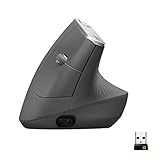

Top 3 picks at a glance
Quick comparison of the best vertical mice
| Mouse | Best for | Approx. hand fit | Grip angle | Sensor resolution | Wireless power | Typical market range |
|---|---|---|---|---|---|---|
| Logitech Lift | Small to medium hands and compact desks | About 16–19 cm long | 57 degrees | Up to 4,000 DPI | One AA battery, rated up to 24 months | Usually $50–$80 |
| Logitech MX Vertical | Large hands and productivity shortcuts | About 19–21 cm long | 57 degrees | 400–4,000 DPI | Rechargeable, rated up to four months per charge | Usually $80–$120 |
| Evoluent VerticalMouse D | Maximum ergonomic adjustment | Multiple size options | Near-vertical design | Varies by version | Wired or wireless, depending on model | Usually $100–$160 |
| Kensington Pro Fit Ergo Vertical Wireless Mouse | Value-conscious office use | Medium to large hands | About 46 degrees | Up to 1,600 DPI | Two AA batteries, commonly rated for long-term use | Usually $35–$60 |
Hand-length figures are practical starting points, not strict compatibility limits. Measure from the crease at your wrist to the tip of your middle finger, then compare that measurement with the manufacturer’s size guidance where available. Finger length and preferred grip matter just as much as palm length.
Logitech Lift: the easiest recommendation for smaller hands
The Logitech Lift is the safest starting point for anyone who finds full-sized ergonomic mice too long or too tall. Its 57-degree angle places the thumb on one side and the fingers on the other without forcing the hand into a completely upright position. That makes the transition from a conventional mouse relatively easy.
Its compact body is particularly useful for small and medium hands. The thumb-rest shape supports the base of the thumb while keeping the back and forward buttons within reach. On a conventional mouse, small-handed users often have to slide the whole hand forward to reach side buttons; the Lift reduces that stretch.
The sensor is more than adequate for office work, browsing, spreadsheets, and light creative applications. At up to 4,000 DPI, it can move a pointer across a large monitor with less physical travel. The main limitation is not tracking quality but control: users who prefer extremely low sensitivity for precision work may find the Lift’s compact body less stable than a larger model.
The single AA battery is a strong advantage for people who dislike charging accessories. Logitech rates it for up to 24 months, although actual life depends on battery chemistry, sleep settings, and usage. Bluetooth and the included wireless receiver make it flexible for laptops and desktops, while multi-device support is useful if you alternate between a work computer and a personal machine.
Choose the Lift if:
- Your hand is below roughly 19 cm long.
- You want a vertical mouse that does not consume much desk width.
- You prefer replaceable batteries over charging.
- You need Bluetooth and multi-device switching.
Logitech MX Vertical: the best large-hand productivity option
The Logitech MX Vertical is better suited to medium-large and large hands. Its 57-degree orientation is similar to the Lift’s, but the body is longer and provides more palm contact. That extra support makes it easier to keep the wrist relaxed instead of balancing the hand on the fingertips.
A dedicated cursor-speed button allows quick switching between normal and precision movement. This is useful when moving between a wide spreadsheet and detailed image editing: a faster setting reduces arm travel, while a slower setting makes small selections easier. The mouse also includes a thumb-rest and several programmable buttons through Logitech Options+.
The MX Vertical’s 4,000 DPI ceiling is not a gaming specification, but it is enough for most productivity setups. A useful starting point is 1,200–1,600 DPI at the operating-system default pointer speed. If you use two 27-inch displays, try 1,600–2,400 DPI, then adjust in small increments rather than immediately choosing the maximum.
Its rechargeable battery is rated for up to four months, and a short charge can provide extended use. The trade-off is a larger footprint and a higher price than the Lift. People with short fingers may also find the side buttons too far forward, especially when using a relaxed fingertip grip.
Choose the MX Vertical if:
- Your hand is around 19 cm or longer.
- You work with multiple monitors, documents, or large spreadsheets.
- You want programmable buttons and quick cursor-speed switching.
- You prefer rechargeable hardware and do not mind a larger body.
Evoluent VerticalMouse D: the adjustment specialist
The Evoluent VerticalMouse D is aimed at users who need more precise ergonomic fitting than a one-size-fits-most design provides. Different sizes and configurations make it possible to match the shell to your palm and finger length more closely. Some versions also provide adjustable pointer controls and a more pronounced vertical posture than mainstream Logitech models.
That near-vertical position can reduce forearm rotation further, but it also takes longer to learn. Your thumb, index finger, and middle finger approach the buttons from different angles than they do on a standard mouse. The benefit is a stable palm-first grip; the cost is that rapid clicking and casual fingertip repositioning may initially feel awkward.
Button placement is the main reason to choose Evoluent rather than simply buying the largest vertical mouse available. The thumb buttons are designed to be reachable without squeezing the shell, and the finger buttons are separated to reduce accidental presses. Check the exact layout before buying because wired and wireless versions, handedness, and size can differ.
This is the strongest choice for someone with recurring discomfort who already knows that a more upright posture helps. It is less compelling for a first-time vertical-mouse buyer who wants an inexpensive experiment.
Kensington Pro Fit Ergo Vertical: affordable comfort with fewer extras
The Kensington Pro Fit Ergo Vertical Wireless Mouse provides a lower-cost route into the vertical design. Its angle is less extreme than the most upright models, so it feels familiar sooner. That makes it suitable for office work, browsing, and general desktop use when the goal is to reduce wrist twisting without radically changing technique.
The sensor resolution is modest, with settings up to 1,600 DPI. That is sufficient for a single monitor or a normal laptop display, but users with high-resolution multi-monitor setups may need larger arm movements. Its AA batteries avoid charging interruptions, although two-cell designs generally add more weight than rechargeable alternatives.
The broad shell favors medium and larger hands. Small-handed users should check whether the index and middle fingers can rest naturally on the main buttons without reaching forward. If they cannot, the reduced forearm rotation may be outweighed by finger and shoulder tension.
Decision matrix: match the mouse to your situation
| Your situation | Best match | Why | Potential drawback |
|---|---|---|---|
| Small hands, narrow desk, laptop use | Logitech Lift | Shorter body, compact footprint, Bluetooth | Less palm support for large hands |
| Large hands, two monitors, office shortcuts | Logitech MX Vertical | Longer palm support, programmable controls, 4,000 DPI | Can feel oversized for short fingers |
| Severe preference for an upright grip | Evoluent VerticalMouse D | More size and posture choices | Higher cost and longer learning curve |
| Single monitor and limited budget | Kensington Pro Fit Ergo Vertical | Lower market price and simple wireless operation | Lower sensor ceiling and fewer software features |
| Frequent travel between workspaces | Logitech Lift | Small footprint and replaceable AA battery | Not ideal for very large hands |
How much desk space does a vertical mouse need?
A vertical mouse can reduce wrist movement but still require more lateral clearance because the shell is taller and your forearm approaches it at an angle. Leave at least 25 cm of clear width beside the keyboard for comfortable use. If your mouse area is only 18–20 cm wide, choose a compact model such as the Lift or consider a shorter keyboard.
Use this simple movement estimate when comparing sensitivity. Suppose your pointer travels 60 cm across a wide desktop workspace and your mouse sensitivity requires 12 cm of physical movement for that pointer distance. Raising sensitivity by 50 percent reduces the required movement to approximately 8 cm:
12 cm ÷ 1.5 = 8 cm
That saves about 4 cm per full traverse, but higher sensitivity can make small selections harder. Start around 1,200–1,600 DPI, keep the operating-system acceleration setting consistent, and change only one setting at a time.
Grip, tracking, and button checks before buying
- Check palm contact: your palm should rest on the shell without your wrist hanging off the edge.
- Check finger reach: the index and middle fingers should land near the center of the main buttons, not on their front edges.
- Check the thumb: you should reach side buttons by moving the thumb, not by squeezing the entire mouse.
- Check tracking: test the mouse on your actual desk surface. Very glossy, transparent, or heavily patterned surfaces can produce inconsistent tracking.
- Check wireless placement: if the receiver is hidden behind a metal desktop or several feet from the mouse, use a short USB extension to bring it closer.
- Check charging habits: a rechargeable model suits a permanent workstation; a replaceable-battery model is more convenient for shared desks and travel.
Which of these is the best vertical mouse?
For most people with smaller or average-sized hands, the Logitech Lift is the easiest recommendation because its angle, size, battery life, and wireless options are balanced. Choose the Logitech MX Vertical if you have larger hands or need more palm support and productivity controls. Choose the Evoluent VerticalMouse D when detailed sizing and an upright posture matter more than price. The Kensington Pro Fit Ergo Vertical is the sensible budget choice for a single-monitor office setup.
Whichever model you choose, allow several days for adaptation. Keep the mouse close to the keyboard, support your forearm on the desk, and avoid gripping the shell tightly. A vertical mouse works best when it changes your posture without making you reach farther or press harder.
Frequently asked questions
Can a vertical mouse eliminate wrist discomfort?
No, a vertical mouse cannot guarantee that it will eliminate discomfort. It can reduce the forearm rotation required by a conventional mouse, but comfort also depends on hand size, grip angle, button reach, sensor behavior, wireless endurance, and available desk space. A mouse that is too large or forces the fingers to stretch may create finger or shoulder tension instead.
How should I measure my hand before choosing one?
Measure from the crease at your wrist to the tip of your middle finger, then compare the result with the manufacturer’s size guidance when available. Hand-length figures are only practical starting points, not strict compatibility limits. Finger length and preferred grip matter too, so consider whether your fingers can reach the buttons without stretching.
Which vertical mouse is easiest to transition to from a conventional mouse?
The Logitech Lift is likely the easiest transition because its 57-degree angle does not place the hand completely upright. Its thumb-rest shape and compact body support a familiar grip while reducing the reach to the side buttons. The Kensington Pro Fit Ergo Vertical may also feel familiar because its angle is less extreme than more upright designs.
Are replaceable batteries better than rechargeable power for these mice?
Neither power approach is universally better. The Logitech Lift uses one AA battery and is rated for up to 24 months, while the Kensington uses two AA batteries and avoids charging interruptions. The Logitech MX Vertical is rechargeable and rated for up to four months per charge. Your preference depends on whether you value charging convenience or replaceable power.
Is a higher DPI setting always better for office work?
No, a higher DPI setting is not always better for office work. Up to 4,000 DPI can reduce physical travel across a large monitor, but extremely low sensitivity may feel more stable for precision work. A useful starting point for the MX Vertical is 1,200–1,600 DPI, with adjustments made gradually for larger or multi-monitor setups.


